TH9507 / Ipamorelin Blend (6MG / 2MG) Analytical Reference Material (In Vitro Research Only)
A two-peptide research blend of TH9507 (tesamorelin, a GHRH analog) and Ipamorelin. The two act on different pituitary receptors: TH9507 on the GHRH receptor and Ipamorelin on the ghrelin receptor (GHS-R1a). Published cell-culture work has studied each in endocrine cells. Each component is listed separately below.
2:00 PM PST Same-Day Laboratory Dispatch · Free Shipping Over $300
1:1 Analytical & Chemical Specifications
| Analytical Parameter | Verified Specification |
|---|---|
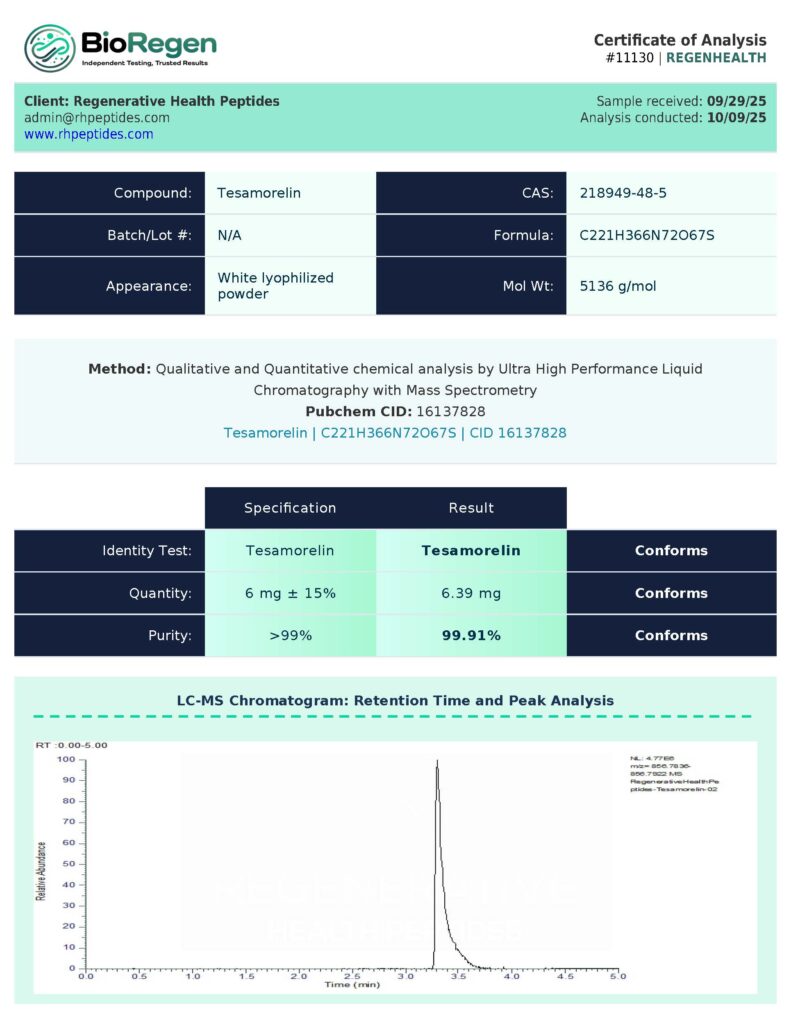
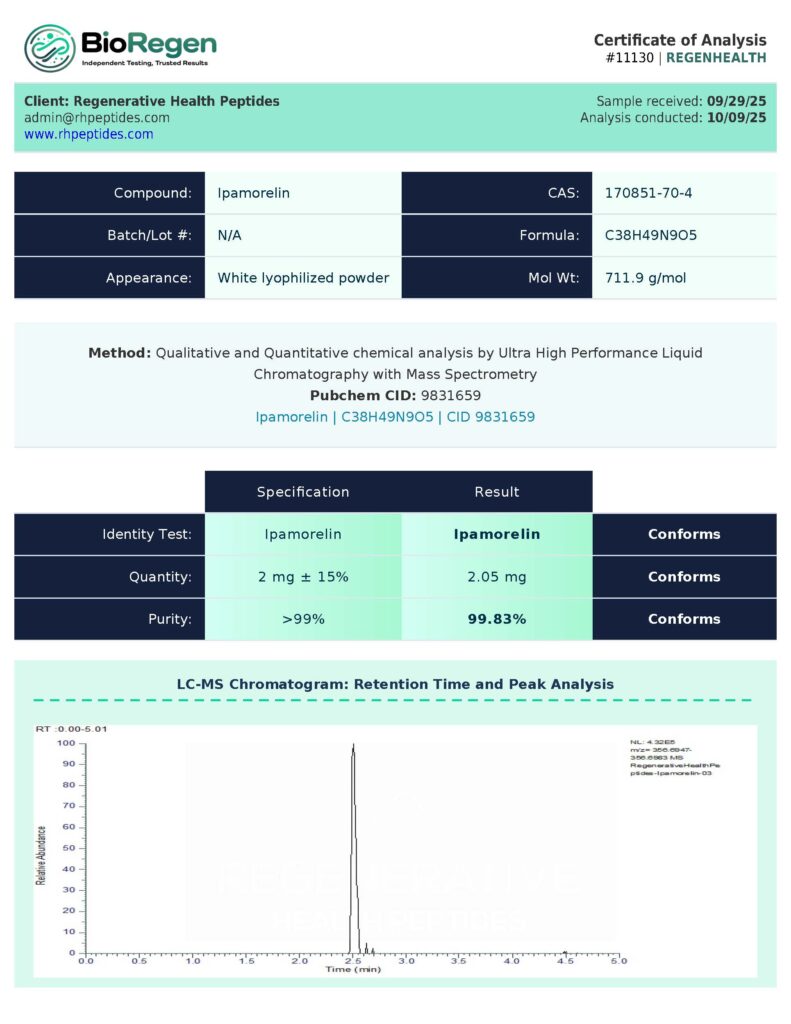
| CAS Number | TH9507 (Tesamorelin): 218949-48-5 | Ipamorelin: 170851-70-4 |
| Molecular Formula | TH9507 (Tesamorelin): C221H366N72O67S | Ipamorelin: C38H49N9O5 |
| Molecular Weight | TH9507 (Tesamorelin): 5135.90 g/mol | Ipamorelin: 711.86 g/mol |
| Amino Acid Sequence | TH9507 (Tesamorelin) (6mg / 8mg): trans-hexenoyl-GRF(1-44)-NH2 | Ipamorelin (2mg): Aib-His-D-2Nal-D-Phe-Lys-NH2 |
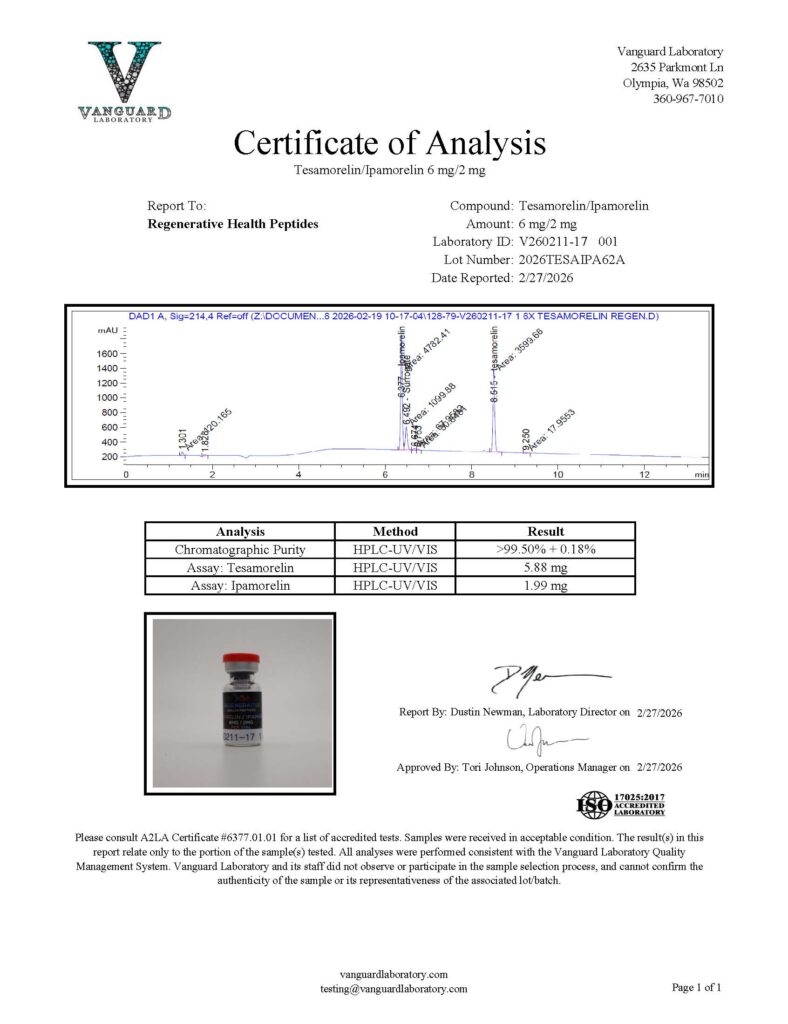
| Chromatographic Purity (RP-HPLC) | >=99.0% Peak Area (Observed Lot 2026TESAIPA62A: 99.3%) |
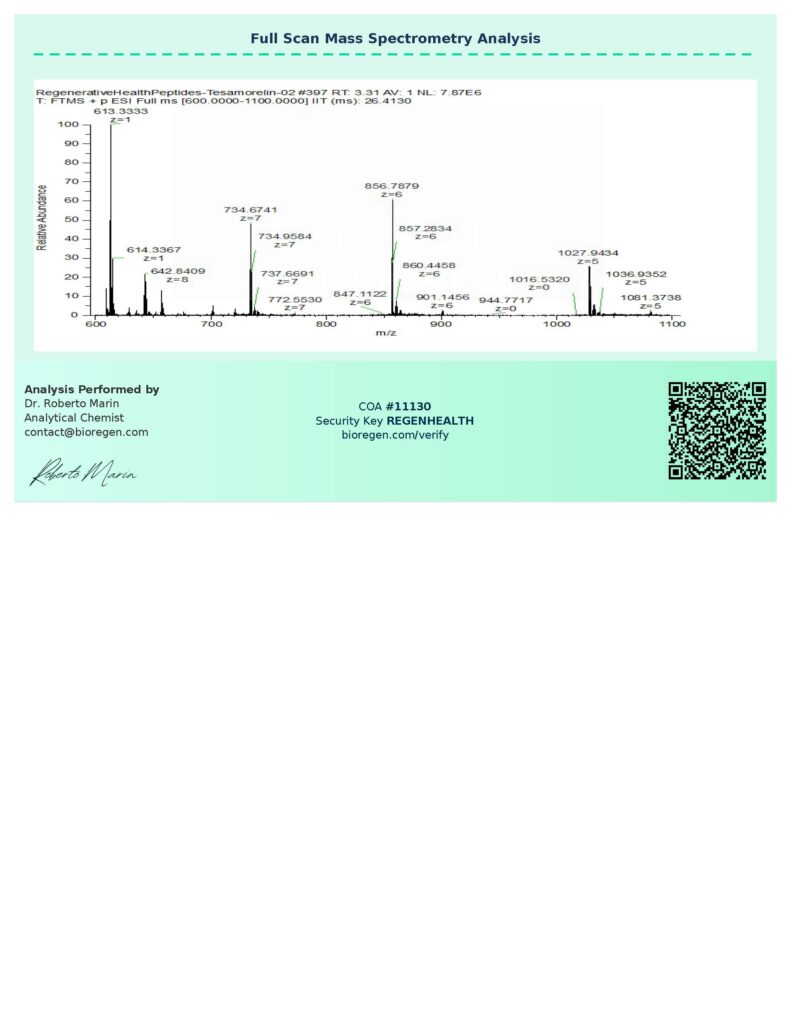
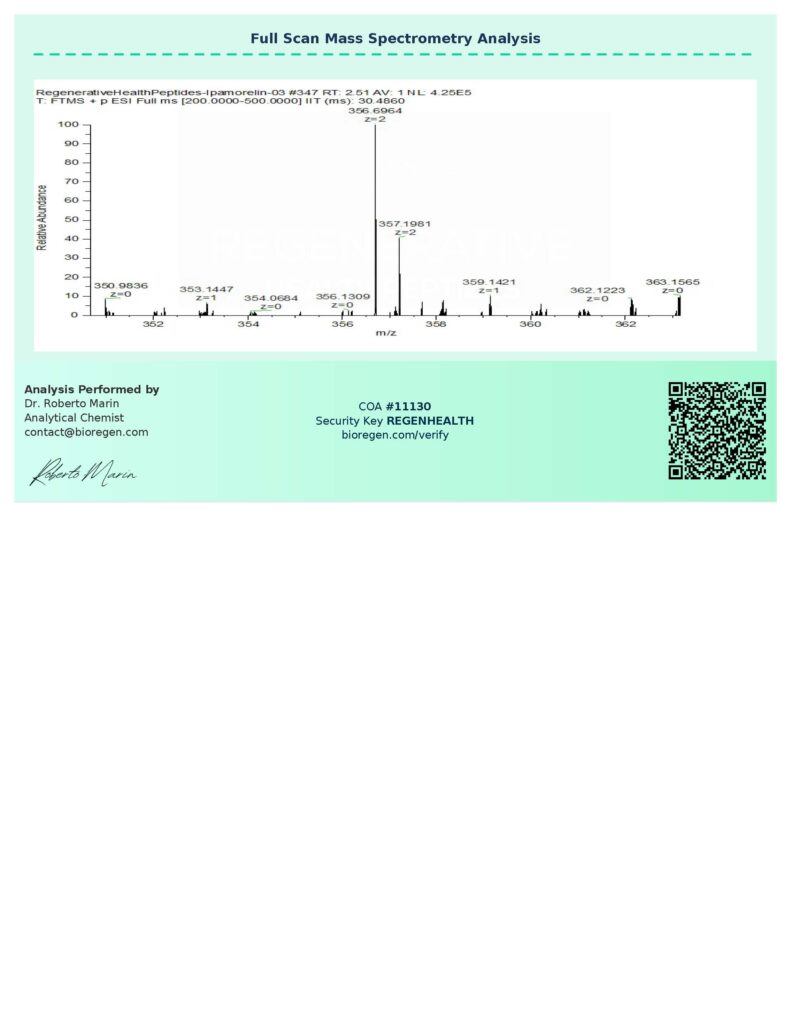
| Identity Verification | Electrospray Ionization Mass Spectrometry (ESI-MS) |
| Physical Form | Lyophilized Powder in Sealed Desiccated Glass Vial |
| Recommended Storage | -20°C Desiccated & Protected from Light |
| Regulatory Classification | Research Use Only (RUO) — Not a 503A Compounding Pharmacy Product; Strictly Not for Human or Veterinary Use |
| Lot Traceability | Lot 2026TESAIPA62A (Tested 2026-03-02) — Verify Dataset in COA Library → |
| Blend Component Breakdown | |
| TH9507 (Tesamorelin) (6mg / 8mg) |
MW: 5135.90 g/mol
CAS: 218949-48-5
Seq: trans-hexenoyl-GRF(1-44)-NH2
|
| Ipamorelin (2mg) |
MW: 711.86 g/mol
CAS: 170851-70-4
Seq: Aib-His-D-2Nal-D-Phe-Lys-NH2
|
Lot-Specific Certificate of Analysis (COA)
In Vitro Laboratory Research Scope
Typical laboratory uses: studying how endocrine cell cultures respond when the GHRH receptor and the ghrelin receptor are engaged together. For in-vitro laboratory research only. Not for human or animal use.
Analytical Verification & Storage Parameters for TH9507 / Ipamorelin Blend
How is the chromatographic purity of TH9507 / Ipamorelin Blend (6MG / 2MG) verified?
Every production batch of TH9507 / Ipamorelin Blend (6MG / 2MG), including active Lot 2026TESAIPA62A, undergoes independent Reverse-Phase High-Performance Liquid Chromatography (RP-HPLC) with UV/Vis detection at 214 nm and Electrospray Ionization Mass Spectrometry (ESI-MS), confirming 99.3% peak area purity (retention time 13.10 min) and exact molecular mass concordance prior to catalog release.
What are the laboratory storage and stability parameters for lyophilized TH9507 / Ipamorelin Blend?
Lyophilized TH9507 / Ipamorelin Blend reference material is supplied in a sealed, desiccated borosilicate glass vial under inert atmosphere and must be stored at -20°C protected from light to prevent hydrolytic or oxidative cleavage. Once solubilized in sterile aqueous buffer for in vitro assays, maintain aliquots at 2°C to 8°C and avoid repeated freeze-thaw cycles.
What are the chemical identifiers and regulatory classification of TH9507 / Ipamorelin Blend?
TH9507 / Ipamorelin Blend is characterized by CAS Registry identifier TH9507 (Tesamorelin): 218949-48-5 | Ipamorelin: 170851-70-4, molecular formula TH9507 (Tesamorelin): C221H366N72O67S | Ipamorelin: C38H49N9O5, and theoretical molecular weight TH9507 (Tesamorelin): 5135.90 g/mol | Ipamorelin: 711.86 g/mol. Regenerative Health Peptides supplies this reagent strictly as a Research Use Only (RUO) analytical reference material for qualified 21+ in vitro laboratory investigations, never for human or veterinary use.
Primary Scientific Literature & Preclinical Citations
Peer-ReviewedThe following peer-reviewed scientific publications report preclinical investigations into the biochemical mechanisms and receptor pharmacology of this compound. Regenerative Health Peptides supplies this material strictly for in-vitro laboratory research.
Laboratory Testing Guides & Documentation
View All Guides →Similar Research Peptides

Sermorelin
Sermorelin is a 29-amino-acid fragment (GRF 1-29) of human growth-hormone-releasing hormone. Published work reported that…


TH9507
TH9507 is the research designation for tesamorelin, a synthetic 44-amino-acid version of growth-hormone-releasing hormone (GHRH)…

MOTS-c
MOTS-c is a 16-amino-acid peptide encoded in mitochondrial DNA, the genetic material of the cell's…