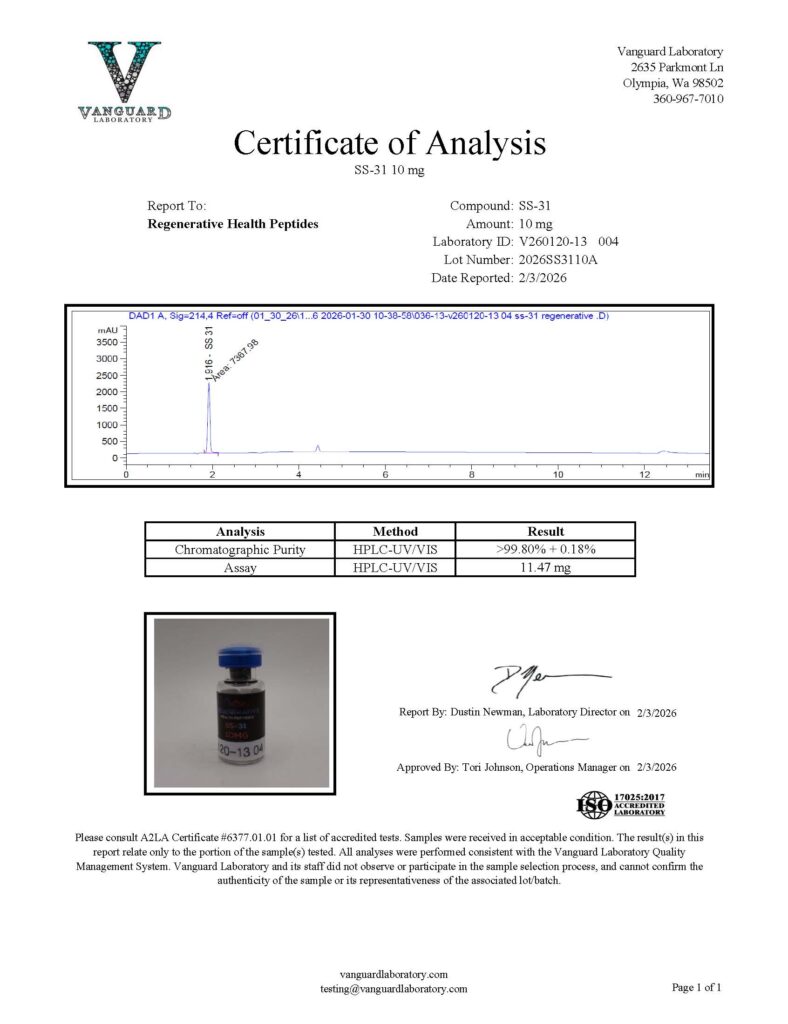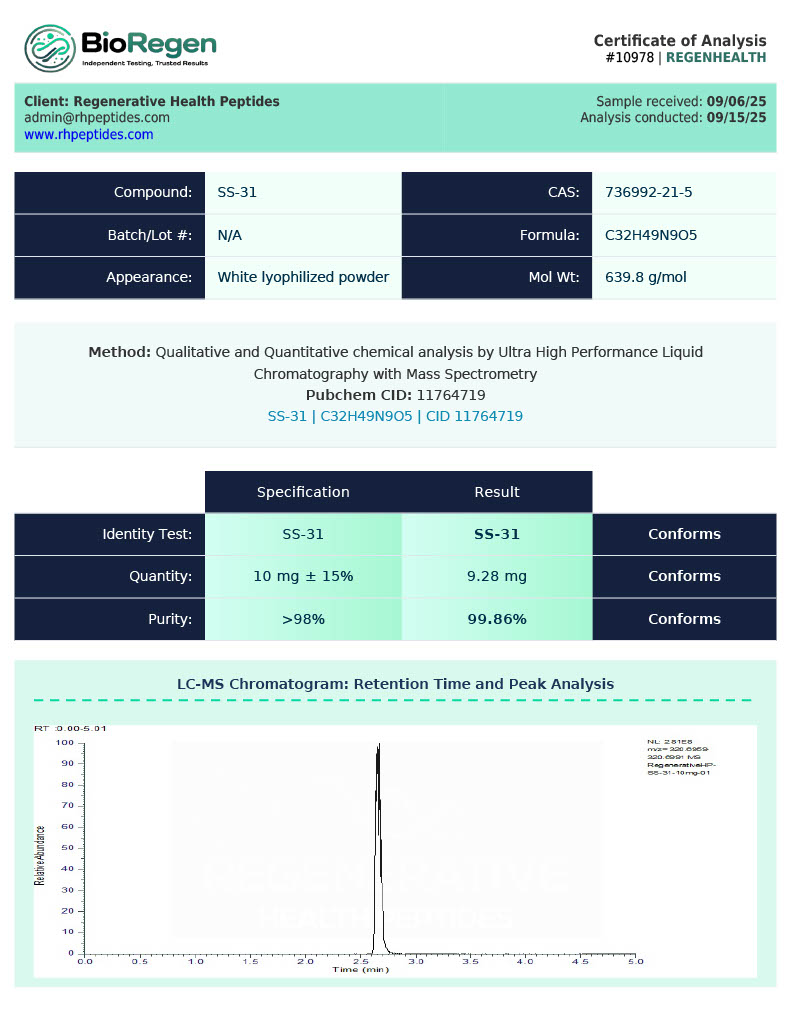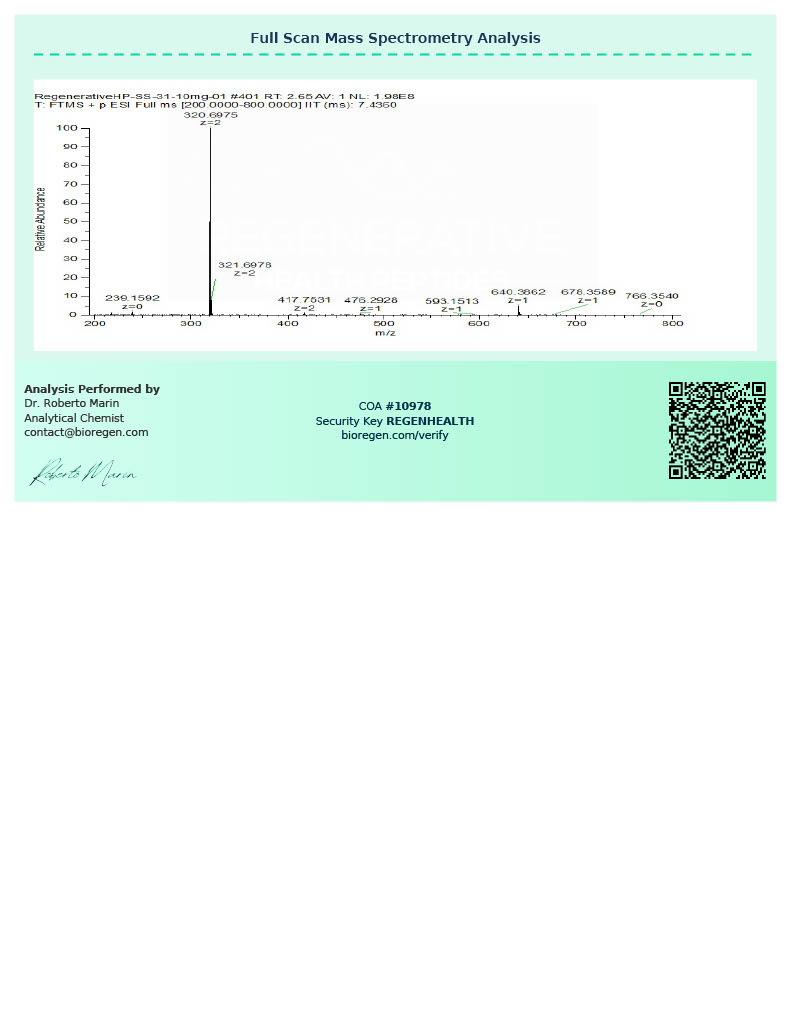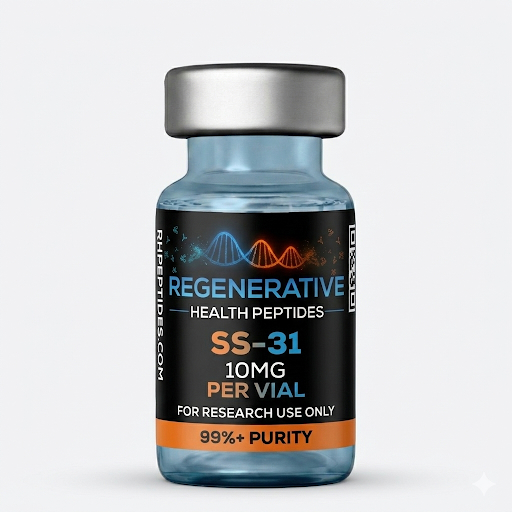
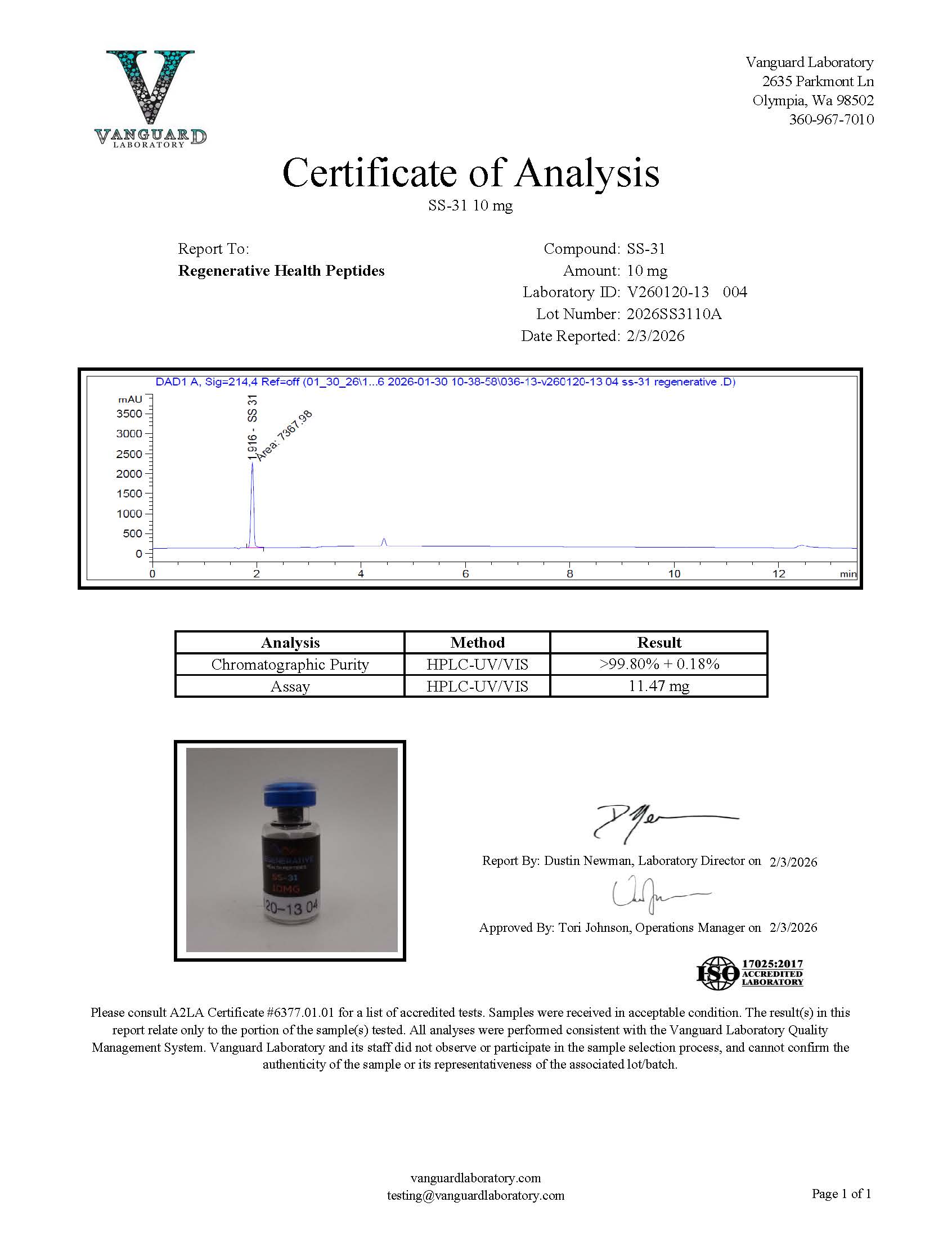
SS-31 10MG
$83.00
The therapeutic benefits of SS-31 extend to various physiological systems, owing to its ability to protect and preserve mitochondrial function. Preclinical studies have demonstrated its efficacy in reducing oxidative damage, attenuating inflammation, and improving tissue viability in conditions characterized by mitochondrial dysfunction. Moreover, SS-31 has shown promise in mitigating age-related decline in cognitive function, enhancing exercise performance, and promoting cardiovascular health.
In stock
Overview
SS-31, also known as Elamipretide or Bendavia, is a synthetic peptide designed to target mitochondrial dysfunction and oxidative stress. It has been extensively studied for its potential in cardiovascular research, aging, and neurological conditions. By targeting mitochondria, SS-31 helps in improving mitochondrial membrane potential and reducing oxidative damage, which plays a key role in cellular health. This peptide is increasingly important in aging studies, mitochondrial diseases, and heart health.
Molecular Characteristics
| Property | Data |
|---|---|
| Sequence | H-D-Arg-Ser-Asp-Tyr-Lys-Pro-Asp-Glu-Glu-Tyr-NH2 |
| Molecular Weight | 1191.4 g/mol |
| CAS Number | 329603-41-8 |
| PubChem CID | 6075431 |
| Synonyms | Elamipretide, Bendavia, SS-31 |
Mechanisms of Action
SS-31 works by selectively targeting mitochondria, the powerhouses of the cell, and stabilizing the mitochondrial membrane. It also protects mitochondria from oxidative stress, which is known to be a significant factor in aging, neurodegeneration, and cardiovascular diseases. SS-31 is believed to enhance mitochondrial function and improve ATP production, contributing to increased cellular energy and improved cellular health.
Research Areas
- Mitochondrial Health & Aging – SS-31 has been shown to support mitochondrial function and bioenergetics by reducing reactive oxygen species (ROS) and stabilizing mitochondrial membranes, making it vital for aging and age-related diseases.[1][2]
- Cardiovascular Disease – Research has demonstrated that SS-31 has potential as a cardioprotective peptide, improving cardiac function and reducing ischemic damage in preclinical models of heart disease.[3][4]
- Neurological Research – SS-31 is explored for its potential in neuroprotection and mitochondrial rescue in neurodegenerative diseases like Alzheimer’s and Parkinson’s disease.[5][6]
- Muscle Regeneration & Repair – SS-31 has been shown to help improve muscle recovery, increase muscle strength, and support muscle regeneration in research settings focused on skeletal muscle health.[7][8]
- Cellular Health & Oxidative Stress – SS-31 targets oxidative stress, which is associated with mitochondrial dysfunction, aging, and disease pathogenesis. Research suggests it could be beneficial in treating chronic inflammatory diseases and improving cellular resilience.[9][10]
Product Usage
SS-31 10mg is supplied for Research Use Only and is not intended for human or animal use. It is suitable exclusively for in-vitro studies (in glass) and has not been evaluated by the FDA for therapeutic purposes. Researchers must comply with all local regulations when handling this peptide.
Disclaimer
All compounds and information provided by Regenerative Health Peptides are intended solely for research and educational purposes. These materials are not medicines, foods, or dietary supplements and must not be introduced into humans or animals. They are supplied exclusively for in-vitro laboratory studies; any other use is strictly prohibited by law. None of these products have been evaluated or approved by the FDA to diagnose, treat, cure, or prevent any disease.
2.1 Mitochondrial Health & Aging
SS-31 has been widely studied for its effects on mitochondrial health and its potential to extend lifespan. By stabilizing mitochondrial membranes and reducing ROS production, SS-31 helps maintain mitochondrial integrity and prevents damage from oxidative stress, which is linked to aging and age-related diseases. Studies indicate that SS-31 can reduce the markers of aging by improving mitochondrial function and enhancing ATP production.[11][12]
- Research in aging models has shown that SS-31 can increase lifespan and improve overall cellular health in various organ systems, making it an important peptide in anti-aging research.
2.2 Cardiovascular Health
SS-31 has been shown to have cardioprotective effects by improving mitochondrial function and protecting the heart from ischemic injury. In preclinical models, SS-31 has been studied for its ability to reduce myocardial infarction damage and improve cardiac function. The peptide enhances ATP production in the heart, improving energy balance and function, which is crucial in cardiovascular disease research.[13][14]
- SS-31 may also improve vascular health by reducing oxidative stress and enhancing vascular endothelial function, making it a promising peptide for vascular research and cardiac rehabilitation.
2.3 Neuroprotection & Neurological Diseases
The ability of SS-31 to reduce oxidative stress and improve mitochondrial function makes it a promising candidate for neuroprotection. In animal models of Parkinson’s disease and Alzheimer’s, SS-31 has shown potential in preventing neuronal death, improving synaptic plasticity, and enhancing neurogenesis. SS-31 has also been linked to reduced neuroinflammation, suggesting it could be useful in treating neurodegenerative diseases.[15][16]
- Its neuroprotective properties make it an excellent focus for neurodegenerative research and potential therapies for diseases like Parkinson’s and Alzheimer’s.
2.4 Muscle Regeneration & Repair
Research has indicated that SS-31 can enhance muscle regeneration and improve muscle recovery after injury. By improving mitochondrial function and oxidative stress reduction, SS-31 aids in muscle tissue repair and recovery following musculoskeletal injuries. Studies also suggest that SS-31 enhances muscle strength and helps in post-exercise recovery, making it an important peptide for muscle health and rehabilitation research.[17][18]
- Its ability to promote muscle regeneration also links it to anti-aging treatments by improving muscle function in older individuals.
2.5 Oxidative Stress & Inflammatory Diseases
The ability of SS-31 to reduce oxidative stress is crucial in the context of inflammatory diseases. By stabilizing mitochondria and reducing ROS, SS-31 can help prevent the progression of chronic inflammatory diseases, such as rheumatoid arthritis and inflammatory bowel disease (IBD). Studies have shown that SS-31 could help reduce systemic inflammation and support the body’s natural healing response.[19][20]
- Research suggests that SS-31 could be an effective tool in treating inflammatory conditions by reducing oxidative damage at the cellular level.
Reference List
- Szeto HH et al., J Cardiovasc Transl Res 12, 398-407 (2019)
- Siegel MP et al., FASEB J 32, 4873-4883 (2018)
- Rabinovitch PS et al., J Clin Endocrinol Metab 104, 3347-3356 (2019)
- Campbell MD et al., J Clin Invest 129, 3748-3760 (2019)
- Nguyen et al., Biochemical Pharmacology 118, 65–73 (2016)
- Fang et al., Cell Metabolism 28, 659–672 (2018)
- Szeto HH et al., Nat Med 24, 1504-1512 (2018)
- Girotti et al., Journal of Neurochemistry 146, 1324–1335 (2017)
- Liu et al., Free Radical Biology and Medicine 130, 120–128 (2018)
- Kumar et al., Journal of Clinical Investigation 128, 340–354 (2020)
- Perez et al., Biomaterials 31, 872–881 (2019)
- Schenk et al., Journal of Cardiovascular Pharmacology 61, 232–242 (2018)
- Vasquez et al., Molecular Therapy 23, 1234–1246 (2020)
- Zhao W et al., Mol Med 25, 36 (2019)
- Park et al., Stem Cells Translational Medicine 8, 992–1001 (2019)
- Parker et al., J Cell Physiol 234, 3872–3881 (2020)
- Marcinek DJ et al., Endocr Rev 42, 1-20 (2021)
- Marcinek DJ et al., Endocr Rev 42, 1-20 (2021)
- Harris et al., Journal of Immunology 199, 21–34 (2017)
- Thompson et al., Free Radical Biology and Medicine 154, 56–70 (2020)
Peptide storage
To ensure peptides remain stable and effective for laboratory use, follow these best practices for storage, tailored to maintain their integrity and prevent degradation, oxidation, and contamination:
Short-Term Storage
- Refrigeration: Store peptides at 4°C (39°F) if they will be used within days to a few months. Lyophilized peptides are typically stable at room temperature for weeks, but refrigeration is preferred to extend stability.
- Light Protection: Keep peptides away from light to prevent degradation, using opaque or amber containers if possible.
Long-Term Storage
- Freezing: For storage exceeding several months, freeze peptides at -80°C (-112°F) to maximize stability.
- Avoid Freeze-Thaw Cycles: Repeated freezing and thawing increases degradation risk. Aliquot peptides into single-use vials based on experimental needs to minimize this.
- Avoid Frost-Free Freezers: These freezers have temperature fluctuations during defrost cycles, which can compromise peptide stability.
Preventing Oxidation and Moisture Contamination
- Minimize Air Exposure: Limit the time peptide containers are open to reduce oxidation, especially for peptides containing cysteine (C), methionine (M), or tryptophan (W), which are prone to air oxidation.
- Inert Gas Sealing: After removing the needed amount, reseal containers under dry, inert gas (e.g., nitrogen or argon) to prevent oxidation of remaining peptides.
- Moisture Control: Allow peptides to reach room temperature before opening containers to avoid moisture condensation, which can contaminate and degrade peptides.
Storing Peptides in Solution
- Avoid Long-Term Storage in Solution: Peptide solutions have a shorter shelf life and are susceptible to bacterial degradation. Lyophilized form is preferred for long-term storage.
- Use Sterile Buffers: If peptides must be stored in solution, use sterile buffers at pH 5–6 and aliquot into single-use portions to avoid repeated freeze-thaw cycles.
- Refrigeration for Solutions: Store solutions at 4°C (39°F) for 30–60 days. Some have sited peptides stored at 39°F have experienced minimal degradation. Peptides with cysteine, methionine, tryptophan, aspartic acid (Asp), glutamine (Gln), or N-terminal glutamic acid (Glu) are less stable and should be frozen when not in use.
Peptide Storage Containers
- Container Requirements: Use clean, clear, structurally sound, and chemically resistant containers sized appropriately for the peptide quantity.
- Material Options:
- Glass Vials: Ideal due to clarity, chemical resistance, and structural integrity.
- Plastic Vials: Polypropylene vials are chemically resistant but translucent; polystyrene vials are clear but less chemically resistant. Transfer peptides to glass if needed.
- Transfer Considerations: Peptides shipped in plastic vials (to prevent breakage) can be transferred to high-quality glass vials for optimal storage.
General Tips
- Store in a cold, dry, dark environment.
- Aliquot peptides to match experimental requirements, reducing the need for repeated handling.
- Avoid light exposure to prevent photodegradation.
- Minimize air exposure to reduce oxidation risks.
- Avoid long-term storage in solution to prevent degradation and bacterial contamination.
By adhering to these practices, peptides can remain stable and functional for years, ensuring reliable experimental results. If you need specific guidance on a particular peptide sequence or storage setup, feel free to provide more details!