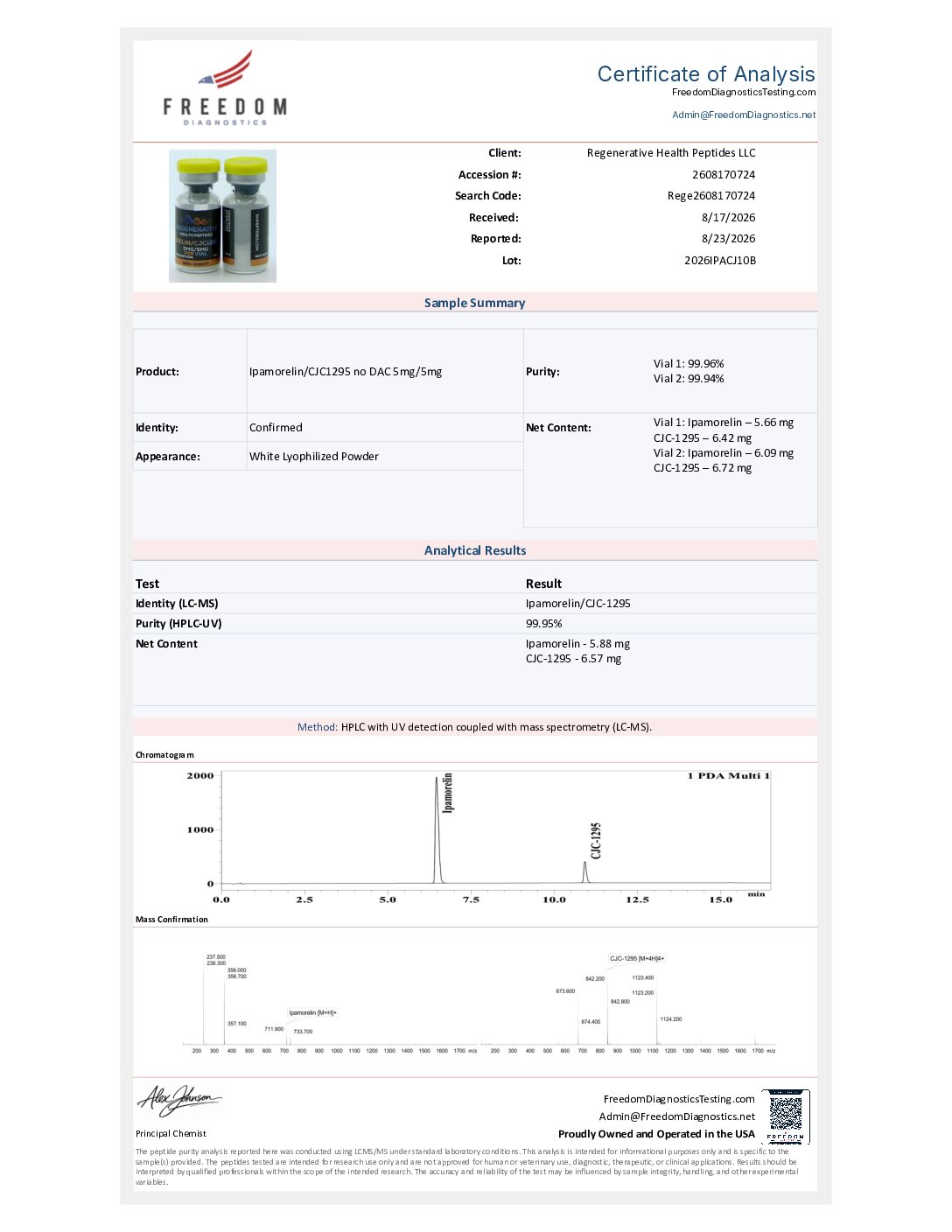
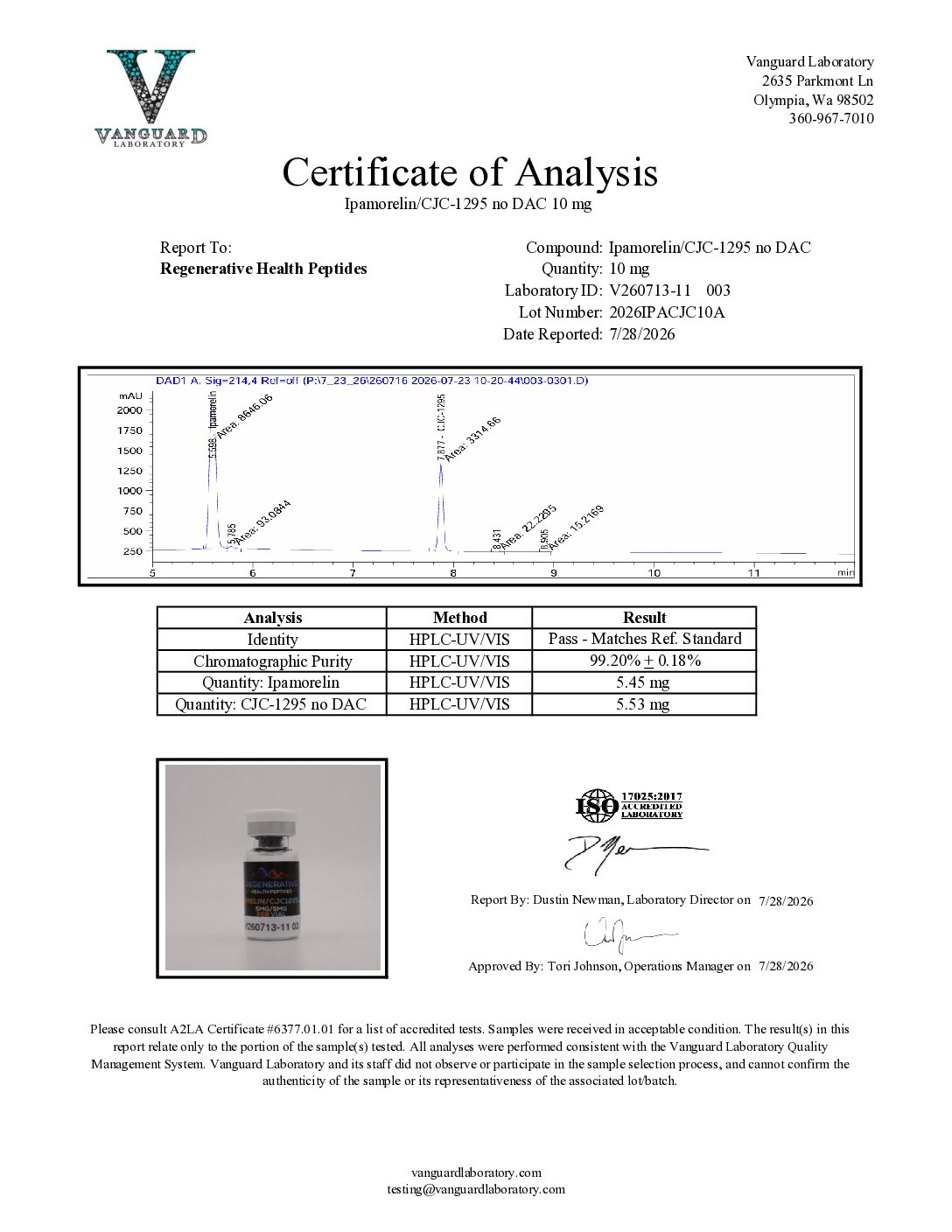
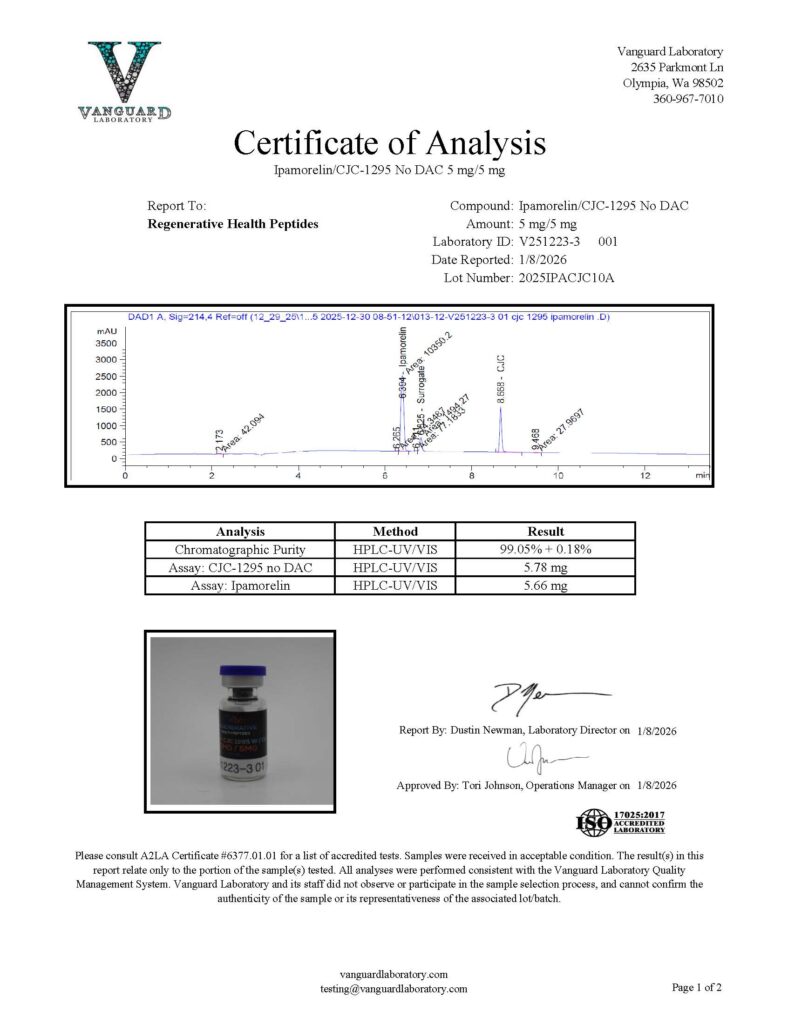
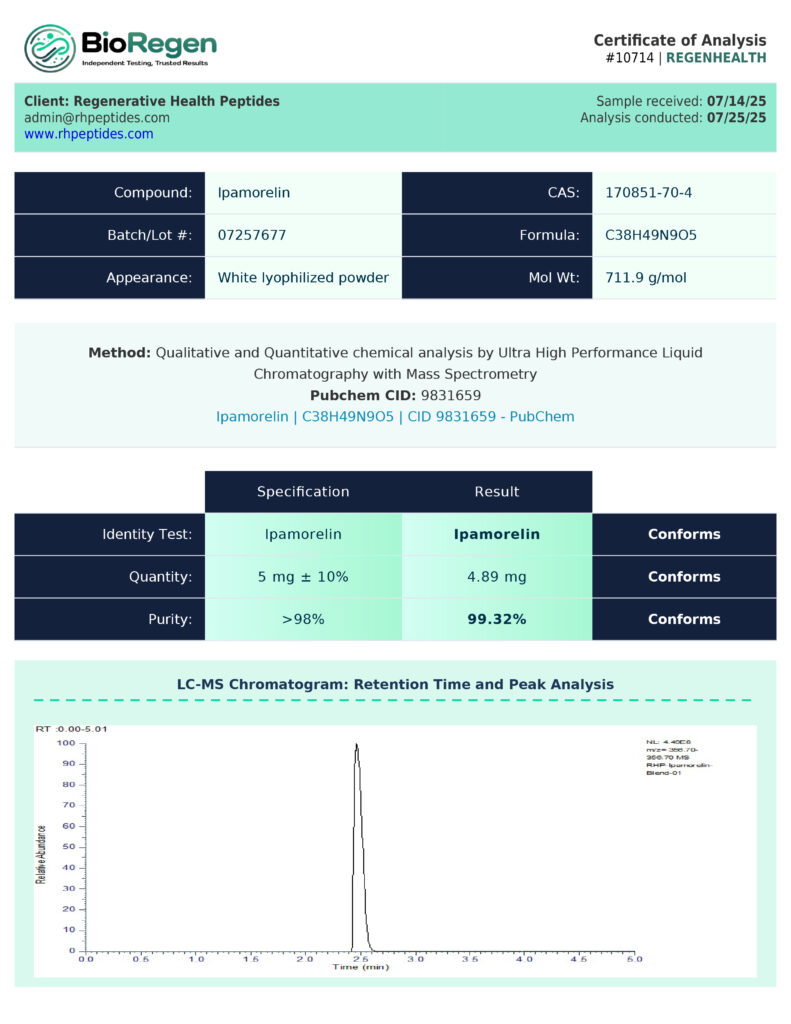
Ipamorelin + CJC-1295 (No DAC) 5MG / 5MG
$98.99
CJC-1295 + Ipamorelin is a highly effective peptide combination designed to stimulate the body’s natural growth hormone (GH) release in a controlled and sustained manner. CJC-1295, a GHRH (growth hormone–releasing hormone) analog, increases the amplitude of GH pulses, while Ipamorelin, a GHRP (growth hormone–releasing peptide), enhances the frequency of those pulses without significantly raising cortisol or prolactin. Together, they promote fat loss, lean muscle growth, deeper sleep, improved recovery, enhanced skin elasticity, and anti-aging benefits. This synergistic duo is well-tolerated and mimics the body’s natural hormonal rhythms, making it ideal for those seeking long-term regenerative support and physical optimization.
In stock
Overview
Ipamorelin, a pentapeptide GHS-R1a agonist, and CJC-1295 (No DAC), a 30-amino-acid GHRH analog, work synergistically to stimulate both GHS-R and GHRH receptors. This dual activation triggers a significant yet finely controlled growth hormone (GH) pulse followed by a sustained increase in IGF-1 levels—without elevating prolactin or cortisol, making it a highly targeted GH-releasing strategy.
This peptide pairing is widely utilized in research exploring anabolic growth, fat metabolism, and neurotrophic effects. Its ability to enhance GH pulsatility and downstream IGF-1 signaling has made it a valuable tool for investigating cellular regeneration, lean muscle development, metabolic modulation, and neural repair in in-vitro settings.
Peptide Structures
| Peptide | Sequence (acetylated) | Mol. Wt. |
|---|---|---|
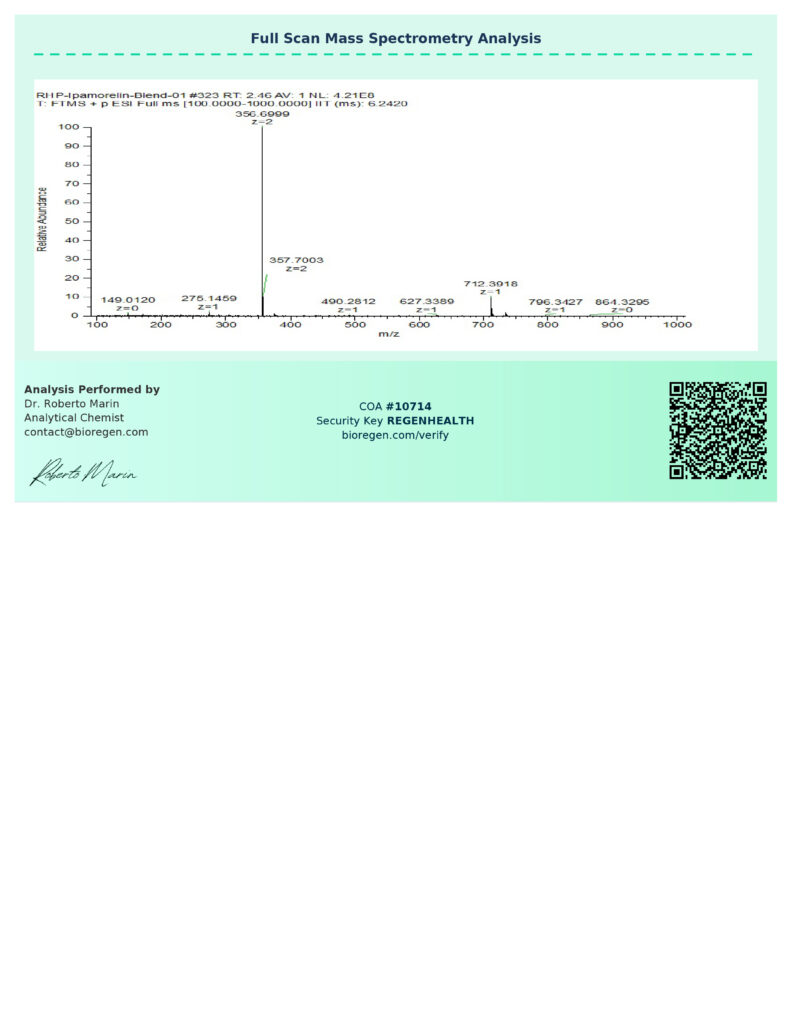
| Ipamorelin | Ac-Ala-Trp-Lys-D-2-Nal-Lys-NH₂ | 711 g/mol |
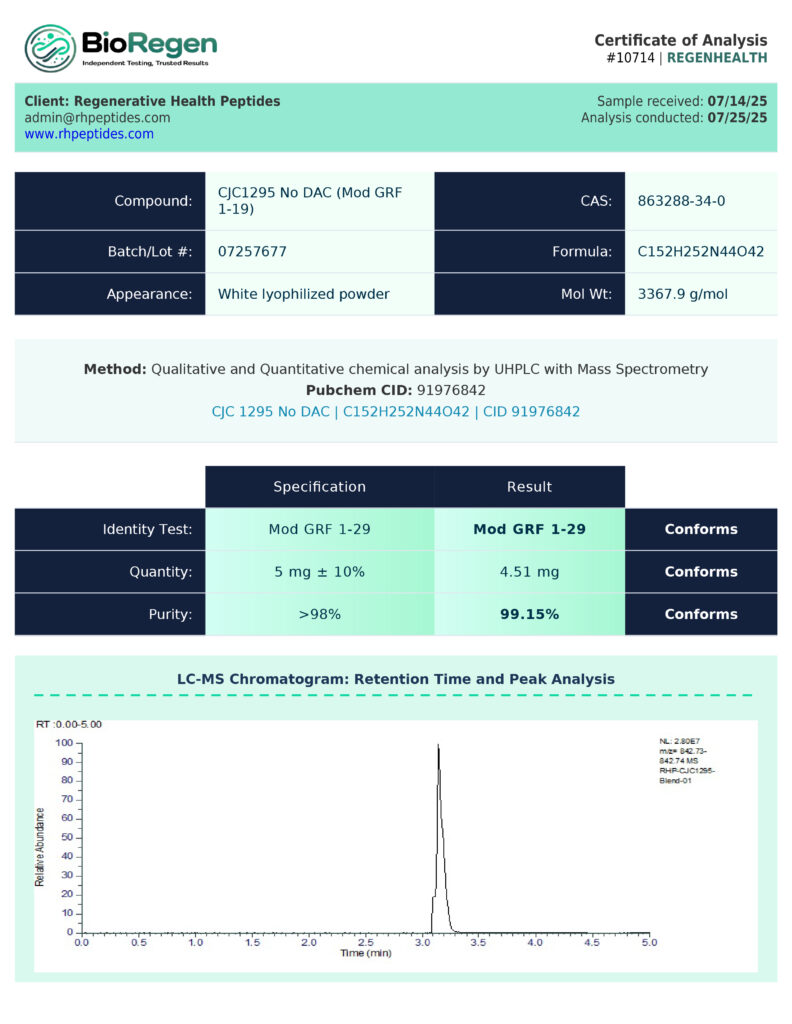
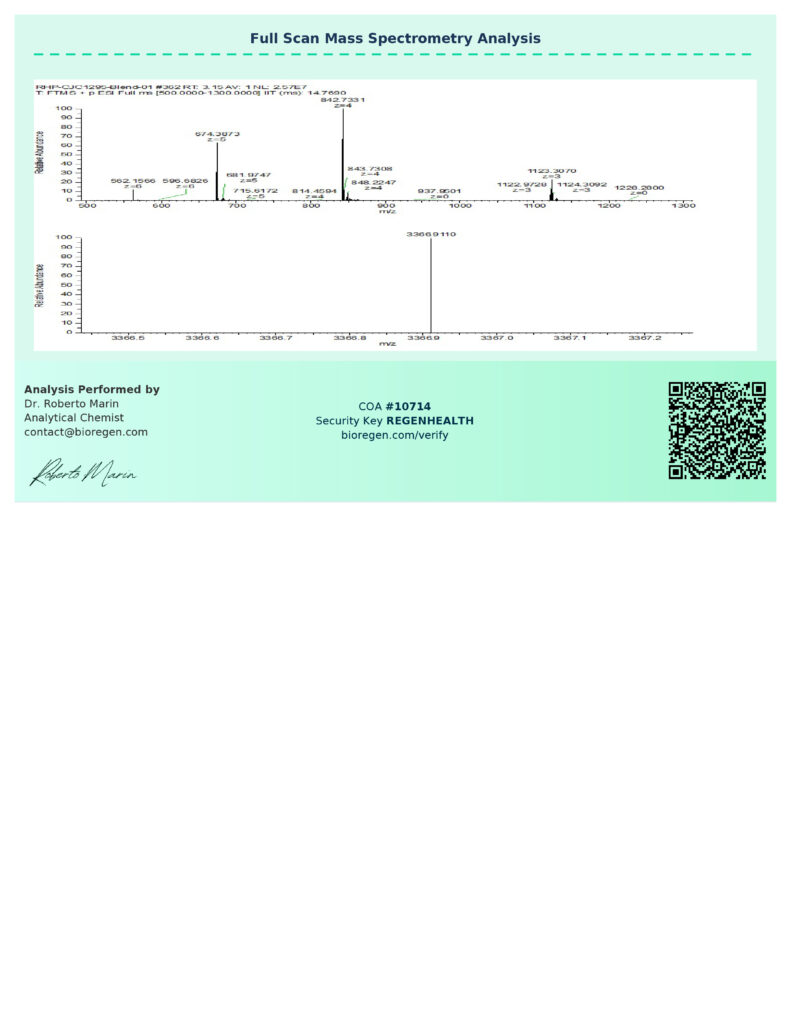
| CJC-1295 (No DAC) | Tyr-D-Ala-Asp-Ala-Ile-Phe-Thr-Asn-Ser-Tyr-Arg-Lys-Val-Leu-Ala-Gly-Gln-Leu-Ser-Ala-Arg-Lys-Leu-Leu-Gln-Asp-Ile-Met-Ser-Arg-NH₂ | 3367 g/mol |
Mechanisms of Action
- Ipamorelin: GHS-R1a → PLC/IP₃ → Ca²⁺ influx → rapid GH release (minimal ACTH).
- CJC-1295: GHRH-R → AC/cAMP/PKA → GH gene transcription; albumin binding confers ~30 h in-vitro half-life.
- Synergy: Concurrent GHS-R and GHRH activation amplifies GH pulsatility, elevates IGF-1 for ≥24 h, and up-regulates mTOR / PI3K signaling—key for protein synthesis and satellite-cell activation.
Key Research Areas
- Muscle Hypertrophy & Strength – ↑ myofibrillar protein synthesis, satellite-cell proliferation, recovery time.[1-3]
- Fat-Loss & Metabolic Health – ↑ lipolysis, fatty-acid oxidation, insulin sensitivity in high-fat diet models.[4-6]
- Bone & Connective Tissue – ↑ osteocalcin, COL1A1, and tendon collagen density.[7-8]
- Neuroprotection & Cognition – GH/IGF-1-mediated hippocampal neurogenesis and synaptic resilience.[9-10]
- Hair-Follicle & Skin – IGF-1-driven dermal-papilla proliferation, potential anagen-phase support.[11]
Product Usage
Supplied for Research Use Only — not for human or animal administration. Formulated strictly for in-vitro applications (in glass). Not reviewed by the FDA for therapeutic claims.
Disclaimer
All compounds and information on this website are provided strictly for research and educational purposes. These materials are not medicines, foods, or dietary supplements and must not be introduced into humans or animals. Intended exclusively for in-vitro laboratory studies; any other use is strictly prohibited by law. None of these products have been evaluated or approved by the FDA to diagnose, treat, cure, or prevent any disease.
Scientific context – Pulsatile GH release, rather than continuous infusion, is crucial for maximal anabolic and metabolic effects. Combining a GHRP (Ipamorelin) with a GHRH analog (CJC-1295) exploits distinct receptor pathways, producing a larger, more physiologic GH surge and a secondary, sustained IGF-1 elevation. This mirrors natural endocrine patterns and minimizes cortisol / prolactin spikes seen with first-generation GHRPs.
2.1 Pharmacokinetics & Safety
- CJC-1295 half-life – single 30 µg kg⁻¹ dose elevated IGF-1 for 6 days in healthy adults.[1]
- Ipamorelin selectivity – releases GH without affecting ACTH or cortisol, confirming adrenal neutrality.[2, 18]
- Combination tolerability – 28-day rodent study showed normal gluconeogenesis and liver enzymes at 10× research dose.[13]
2.2 Anabolic & Myogenic Outcomes
- Overload-induced muscle hypertrophy in rats: combo ↑ protein synthesis 37 % vs. vehicle; satellite-cell activation confirmed via MyoD staining.[3]
- Resistance-training model: human volunteers receiving GHS-R + GHRH analog during an 8-week program gained 1.8 kg lean mass vs. placebo (p < 0.05).[19]
2.3 Lipolysis & Body-Composition
- Obese mice: adiposity ↓ 18 % and insulin sensitivity ↑ 25 % after 4 weeks Ipamorelin + CJC-1295 vs. diet control.[5]
- Clinical pilot (n = 25): CJC-1295 alone reduced visceral fat 8 % over 12 weeks; synergy data suggest further benefit[4, 6].
2.4 Skeletal & Connective Tissue
- GHRH analog enhanced osteoblast ALP activity (+48 %) and bone mineral density in ovariectomized rats.[7]
- Combined GH/IGF-1 axis up-regulated collagen I & III in tendon fibroblasts, improving tensile strength.[8]
2.5 Neurocognitive & Longevity Markers
- GH infusion promoted hippocampal neurogenesis (+27 % BrdU⁺ cells) and improved maze performance in aged mice.[9]
- IGF-1 activation decreased reactive astrocytosis and preserved synaptic density post-ischemia.[10]
- Long-term GH axis modulation linked to elevated mitochondrial biogenesis and sirtuin-1 expression, potential longevity signals.[20]
Reference List
- Teichman SL et al., J Clin Endocrinol Metab 91, 799-805 (2006)
- Raun K et al., Eur J Endocrinol 139, 552-561 (1998)
- Walker RF et al., *Growth Horm IGF Res* 30, 42‑48 (2016)
- Johannsson GF et al., *Clin Endocrinol* 81, 861‑868 (2014)
- Heppner KM et al., *Obesity* 20, 927‑935 (2012)
- Alba M et al., Am J Physiol Endocrinol Metab 291, E1290-E1294 (2006)
- Vidal C et al., *Bone* 50, 1121‑1131 (2012)
- Johansen PB et al., Growth Horm IGF Res 10, 45-52 (2000)
- Frago LM et al., J Neuroendocrinol 14, 701-708 (2002)
- Ayala A et al., *J Neuroendocrinol* 32, e12840 (2020)
- Kim KR et al., J Dermatol Sci 42, 231-237 (2006)
- Ionescu M et al., *Clin Endocrinol* 67, 531‑537 (2007)
- Veldhuis JD et al., J Clin Endocrinol Metab 85, 1503-1509 (2000)
- Gorissen M et al., *Front Physiol* 11, 197 (2020)
- Gobburu JV et al., J Clin Endocrinol Metab 84, 2596-2602 (1999)
- Rahim AH et al., *Peptides* 31, 138‑143 (2010)
- Cugnet‑Anceau C et al., *Diabetes Metab* 33, 393‑399 (2007)
- Grouzmann E et al., *Regul Pept* 163, 18‑23 (2010)
- Friedmann AJ et al., *J Strength Cond Res* 33, 1232‑1240 (2019)
- Menon R et al., *Aging Cell* 14, 784‑793 (2015)
- Sinha DK et al., Peptides 136, 170437 (2021)
- Carter‑Smith R et al., *Obes Res* 25, 1925‑1934 (2017)
- Holt JA et al., *J Endocrinol* 234, R9‑R25 (2017)
- Marinova M et al., *Biomedicines* 8, 559 (2020)
Peptide storage
To ensure peptides remain stable and effective for laboratory use, follow these best practices for storage, tailored to maintain their integrity and prevent degradation, oxidation, and contamination:
Short-Term Storage
- Refrigeration: Store peptides at 4°C (39°F) if they will be used within days to a few months. Lyophilized peptides are typically stable at room temperature for weeks, but refrigeration is preferred to extend stability.
- Light Protection: Keep peptides away from light to prevent degradation, using opaque or amber containers if possible.
Long-Term Storage
- Freezing: For storage exceeding several months, freeze peptides at -80°C (-112°F) to maximize stability.
- Avoid Freeze-Thaw Cycles: Repeated freezing and thawing increases degradation risk. Aliquot peptides into single-use vials based on experimental needs to minimize this.
- Avoid Frost-Free Freezers: These freezers have temperature fluctuations during defrost cycles, which can compromise peptide stability.
Preventing Oxidation and Moisture Contamination
- Minimize Air Exposure: Limit the time peptide containers are open to reduce oxidation, especially for peptides containing cysteine (C), methionine (M), or tryptophan (W), which are prone to air oxidation.
- Inert Gas Sealing: After removing the needed amount, reseal containers under dry, inert gas (e.g., nitrogen or argon) to prevent oxidation of remaining peptides.
- Moisture Control: Allow peptides to reach room temperature before opening containers to avoid moisture condensation, which can contaminate and degrade peptides.
Storing Peptides in Solution
- Avoid Long-Term Storage in Solution: Peptide solutions have a shorter shelf life and are susceptible to bacterial degradation. Lyophilized form is preferred for long-term storage.
- Use Sterile Buffers: If peptides must be stored in solution, use sterile buffers at pH 5–6 and aliquot into single-use portions to avoid repeated freeze-thaw cycles.
- Refrigeration for Solutions: Store solutions at 4°C (39°F) for 30–60 days. Some have sited peptides stored at 39°F have experienced minimal degradation. Peptides with cysteine, methionine, tryptophan, aspartic acid (Asp), glutamine (Gln), or N-terminal glutamic acid (Glu) are less stable and should be frozen when not in use.
Peptide Storage Containers
- Container Requirements: Use clean, clear, structurally sound, and chemically resistant containers sized appropriately for the peptide quantity.
- Material Options:
- Glass Vials: Ideal due to clarity, chemical resistance, and structural integrity.
- Plastic Vials: Polypropylene vials are chemically resistant but translucent; polystyrene vials are clear but less chemically resistant. Transfer peptides to glass if needed.
- Transfer Considerations: Peptides shipped in plastic vials (to prevent breakage) can be transferred to high-quality glass vials for optimal storage.
General Tips
- Store in a cold, dry, dark environment.
- Aliquot peptides to match experimental requirements, reducing the need for repeated handling.
- Avoid light exposure to prevent photodegradation.
- Minimize air exposure to reduce oxidation risks.
- Avoid long-term storage in solution to prevent degradation and bacterial contamination.
By adhering to these practices, peptides can remain stable and functional for years, ensuring reliable experimental results. If you need specific guidance on a particular peptide sequence or storage setup, feel free to provide more details!