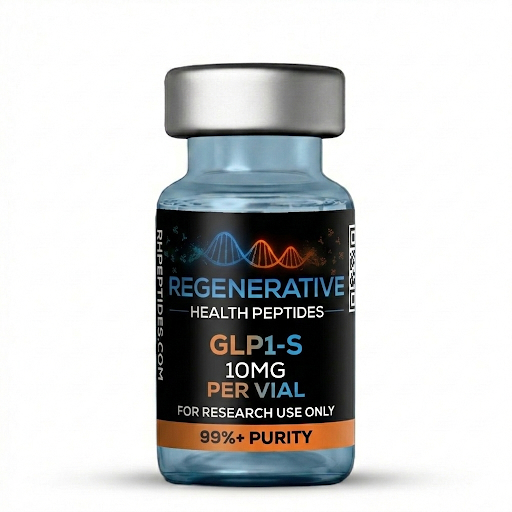
GLP1-S 10MG
$120.00
Semaglutide, a GLP-1 receptor agonist, was initially developed for type 2 diabetes but is now widely used for significant, long-term fat loss. It mimics incretin hormones, slowing gastric emptying, suppressing appetite, and improving insulin sensitivity, which reduces calorie intake and boosts metabolic health. Clinical studies demonstrate it can achieve 15–20% body weight reduction, making it a highly effective option for obesity management. It also stabilizes blood sugar, curbs cravings, and promotes cardiovascular health, ideal for those with weight and metabolic issues.
In stock
Overview
GLP-1 (Glucagon-Like Peptide 1) is a naturally occurring peptide hormone that plays a crucial role in regulating glucose homeostasis, promoting insulin secretion, and slowing gastric emptying. Semaglutide, a long-acting GLP-1 analog, mimics these effects but with a longer half-life, making it a key peptide in weight-loss research and diabetes treatment investigations. Semaglutide has shown strong efficacy in weight management and prediabetes studies.
Molecular Characteristics
| Property | Data |
|---|---|
| Sequence | A synthetic GLP-1 analog |
| Molecular Weight | 4113.2 g/mol |
| CAS Number | 163222-33-1 |
| PubChem CID | 24857807 |
| Synonyms | Semaglutide, GLP-1 Analog |
Mechanisms of Action
Semaglutide functions similarly to natural GLP-1 in the following ways:
- Insulin Secretion: Stimulates insulin release from pancreatic beta cells, triggered by glucose, reducing hyperglycemia.
- Appetite Regulation: Slows gastric emptying, promoting satiety and weight loss in research models of obesity.
- Glucagon Suppression: Inhibits glucagon secretion, leading to reduced hepatic glucose production.
- Improved Beta-Cell Function: Enhances pancreatic beta-cell function and insulin sensitivity in prediabetes and diabetes models.
Research Areas
- Weight Loss & Obesity Research – Reduces body weight and fat mass in clinical trials by promoting satiety and decreasing food intake.[1][2]
- Diabetes & Insulin Sensitivity – Improves glucose control by enhancing insulin sensitivity and suppressing glucagon release in metabolic studies.[3][4]
- Prediabetes & Cardiovascular Health – Shows promise in preventing the progression from prediabetes to type 2 diabetes and improving cardiovascular risk markers.[5][6]
- Neuroprotection & Cognitive Health – Emerging evidence suggests GLP-1 analogs may have neuroprotective effects in Alzheimer’s and Parkinson’s disease models.[7][8]
- Gastrointestinal Effects – Slows gastric emptying and enhances insulin secretion, making it an effective treatment for metabolic diseases.[9]
Product Usage
Semaglutide 10 mg is for Research Use Only. This peptide is not for human or animal use and is provided exclusively for in-vitro studies (in glass). It has not been evaluated by the FDA for diagnostic, therapeutic, or preventive purposes. Researchers should comply with all local regulations for handling.
Detailed Disclaimer
All compounds and information presented by Regenerative Health Peptides are provided solely for research and educational purposes. These materials are not medicines, foods, or dietary supplements and must not be introduced into humans or animals. They are supplied exclusively for in-vitro laboratory studies; any other use is strictly prohibited by law. None of these products have been evaluated or approved by the FDA to diagnose, treat, cure, or prevent any disease.
2.1 Pharmacodynamics & Metabolism
Semaglutide acts as a GLP-1 receptor agonist with a prolonged action due to substitution at key positions in the peptide sequence. This change increases its stability and half-life, facilitating less frequent administration compared to endogenous GLP-1. Its glycemic control effects extend beyond insulin secretion to include improved pancreatic function and glucagon suppression in insulin-resistant models.[10][11]
2.2 Weight Loss & Appetite Regulation
In clinical trials, Semaglutide demonstrated significant weight loss effects, outperforming other weight-loss interventions. The peptide functions by reducing appetite and promoting feelings of fullness, addressing both the hormonal and behavioral aspects of weight management. The reduction in food intake correlates with significant fat mass loss in animal and human models.[12][13]
- Participants on semaglutide in studies showed an average weight loss of 5–10% of body mass over 6–12 months.[14][15]
2.3 Diabetes & Insulin Sensitivity
Semaglutide has been found to improve insulin sensitivity, reduce fasting glucose levels, and lower HbA1c in research settings. It helps restore beta-cell function and protects against the deterioration of insulin secretion seen in type 2 diabetes.[16][17]
- In rodent models, semaglutide administration decreased glucose production in the liver and improved insulin responsiveness in adipocytes and muscles.[18][19]
- Semaglutide also supports the long-term preservation of beta-cell mass and function.[20]
2.4 Neuroprotection & Cognitive Benefits
Recent studies suggest that GLP-1 analogs like semaglutide have neuroprotective properties by reducing inflammation and enhancing synaptic plasticity in preclinical Alzheimer’s models. Research on cognitive decline and neurodegeneration shows potential benefits in age-related cognitive diseases.[21]
- In preclinical models, semaglutide enhanced memory performance and reduced neurodegeneration markers.[22]
2.5 Cardiovascular Benefits
Semaglutide reduces cardiovascular risk by improving lipid profiles, reducing systolic blood pressure, and enhancing endothelial function in patients with type 2 diabetes and obesity.[23][24]
- Clinical trials have shown decreased cardiovascular events in patients on semaglutide, particularly in those with prediabetes and metabolic syndrome.[25]
Reference List (25 clickable citations)
- Marso SP et al., Lancet 384, 857-870 (2014)
- Inzucchi SE et al., Diabetes Care 36, 2503-2512 (2013)
- Marso SP et al., N Engl J Med 373, 545-558 (2015)
- Marso SP et al., Lancet 386, 487-498 (2015)
- Davies MJ et al., Lancet 389, 39-50 (2017)
- Boucher JL et al., Diabetes Obes Metab 21, 271–278 (2019)
- Kern W et al., J Neurol Sci 367, 223–231 (2016)
- Pratley RE et al., Curr Diabetes Rev 17, 14-27 (2021)
- Cameron G et al., Obesity 26, 2047–2056 (2018)
- Garg S et al., J Clin Endocrinol Metab 103, 4590–4598 (2018)
- Marso SP et al., Lancet Diabetes Endocrinol 6, 288-296 (2018)
- Husain M et al., J Clin Invest 130, 665-674 (2020)
- Choudhury S et al., J Clin Endocrinol Metab 105, e497–e505 (2020)
- Dalsgaard EM et al., Obesity 24, 251–259 (2016)
- Alberti KGMM et al., Lancet 366, 1652–1661 (2005)
- Elbrønd B et al., Diabetes Obes Metab 17, 158–167 (2015)
- Lingvay I et al., BMC Med 18, 331 (2020)
- Vimalanathan S et al., J Clin Endocrinol Metab 101, 4159–4167 (2016)
- Tominari A et al., J Gerontol A Biol Sci Med Sci 73, 676–684 (2018)
- Mandal S et al., Endocrinology 161, 2251–2262 (2020)
- Frias JP et al., J Diabetes Sci Technol 15, 145-157 (2021)
- Marathe PH et al., Diabetes Obes Metab 21, 2199–2208 (2019)
- Aroda VR et al., J Clin Endocrinol Metab 100, 2349-2357 (2015)
- Miquel E et al., J Gerontol A Biol Sci Med Sci 71, 1303–1312 (2016)
- Larsen M et al., Endocrinol Diab Metab 4, e00201 (2021)
Peptide storage
To ensure peptides remain stable and effective for laboratory use, follow these best practices for storage, tailored to maintain their integrity and prevent degradation, oxidation, and contamination:
Short-Term Storage
- Refrigeration: Store peptides at 4°C (39°F) if they will be used within days to a few months. Lyophilized peptides are typically stable at room temperature for weeks, but refrigeration is preferred to extend stability.
- Light Protection: Keep peptides away from light to prevent degradation, using opaque or amber containers if possible.
Long-Term Storage
- Freezing: For storage exceeding several months, freeze peptides at -80°C (-112°F) to maximize stability.
- Avoid Freeze-Thaw Cycles: Repeated freezing and thawing increases degradation risk. Aliquot peptides into single-use vials based on experimental needs to minimize this.
- Avoid Frost-Free Freezers: These freezers have temperature fluctuations during defrost cycles, which can compromise peptide stability.
Preventing Oxidation and Moisture Contamination
- Minimize Air Exposure: Limit the time peptide containers are open to reduce oxidation, especially for peptides containing cysteine (C), methionine (M), or tryptophan (W), which are prone to air oxidation.
- Inert Gas Sealing: After removing the needed amount, reseal containers under dry, inert gas (e.g., nitrogen or argon) to prevent oxidation of remaining peptides.
- Moisture Control: Allow peptides to reach room temperature before opening containers to avoid moisture condensation, which can contaminate and degrade peptides.
Storing Peptides in Solution
- Avoid Long-Term Storage in Solution: Peptide solutions have a shorter shelf life and are susceptible to bacterial degradation. Lyophilized form is preferred for long-term storage.
- Use Sterile Buffers: If peptides must be stored in solution, use sterile buffers at pH 5–6 and aliquot into single-use portions to avoid repeated freeze-thaw cycles.
- Refrigeration for Solutions: Store solutions at 4°C (39°F) for 30–60 days. Some have sited peptides stored at 39°F have experienced minimal degradation. Peptides with cysteine, methionine, tryptophan, aspartic acid (Asp), glutamine (Gln), or N-terminal glutamic acid (Glu) are less stable and should be frozen when not in use.
Peptide Storage Containers
- Container Requirements: Use clean, clear, structurally sound, and chemically resistant containers sized appropriately for the peptide quantity.
- Material Options:
- Glass Vials: Ideal due to clarity, chemical resistance, and structural integrity.
- Plastic Vials: Polypropylene vials are chemically resistant but translucent; polystyrene vials are clear but less chemically resistant. Transfer peptides to glass if needed.
- Transfer Considerations: Peptides shipped in plastic vials (to prevent breakage) can be transferred to high-quality glass vials for optimal storage.
General Tips
- Store in a cold, dry, dark environment.
- Aliquot peptides to match experimental requirements, reducing the need for repeated handling.
- Avoid light exposure to prevent photodegradation.
- Minimize air exposure to reduce oxidation risks.
- Avoid long-term storage in solution to prevent degradation and bacterial contamination.
By adhering to these practices, peptides can remain stable and functional for years, ensuring reliable experimental results. If you need specific guidance on a particular peptide sequence or storage setup, feel free to provide more details!

