Thymosin Alpha-1 10MG
$95.99
Thymosin Alpha-1 is a peptide that is actively researched for its potential to:
- Enhance Immune Function: Investigate its role in stimulating T-cell activity and modulating the immune response.
- Support Anti-Inflammatory Pathways: Study its effects on reducing chronic inflammation and promoting a balanced immune system.
- Aid in Infection Defense: Explore its potential to enhance the body’s defense mechanisms against viral and bacterial infections.
- Improve Cancer Research: Research its role in cancer immunotherapy by boosting immune surveillance and response.
In stock
Overview
Thymosin Alpha-1 10mg is a synthetic peptide consisting of a 28-amino acid sequence derived from the thymosin alpha-1 protein. This peptide plays a key role in immune system regulation, primarily by modulating the activity of T-cells and enhancing the immune response. It is increasingly used in research on immune deficiencies, autoimmunity, and infectious diseases due to its ability to stimulate immune cell functions.
Research has highlighted its potential in enhancing cellular immune responses, especially in response to viral infections and cancer treatment. By supporting immune homeostasis, Thymosin Alpha-1 has become a crucial tool in the investigation of immune modulation therapies.
Molecular Characteristics
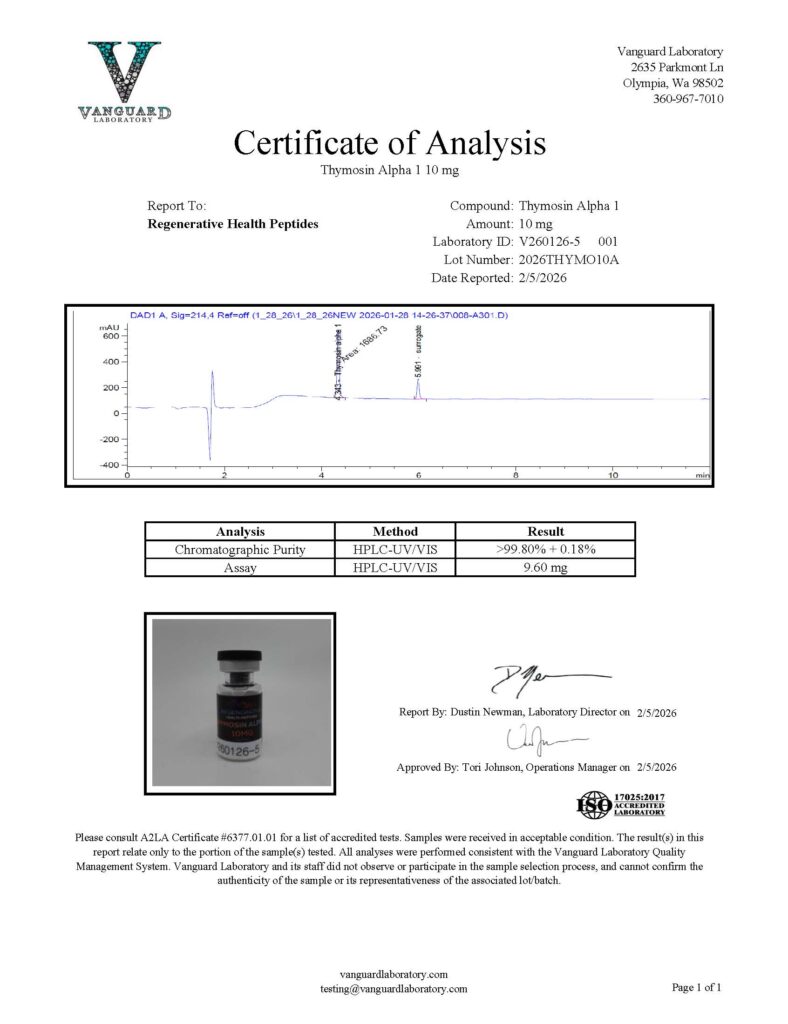
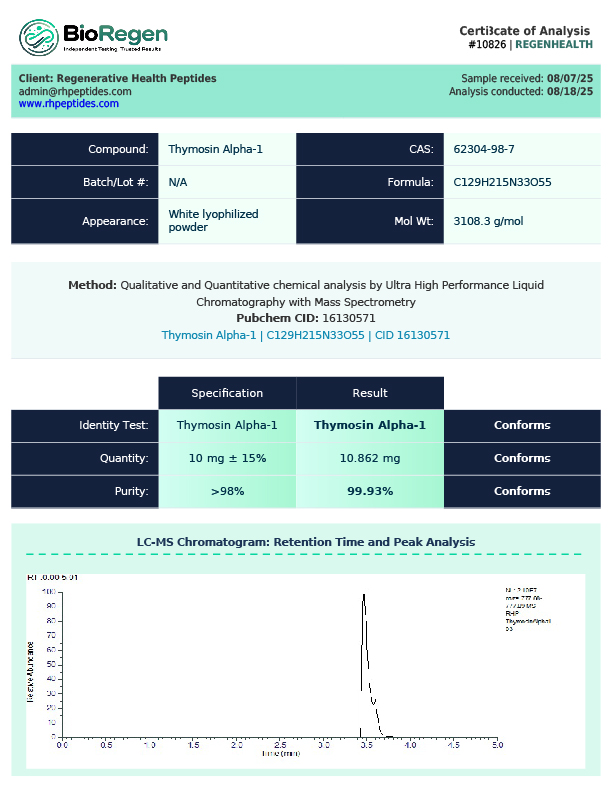
| Property | Data |
|---|---|
| Sequence | Ac-SDKP-28 (Thymosin alpha-1) |
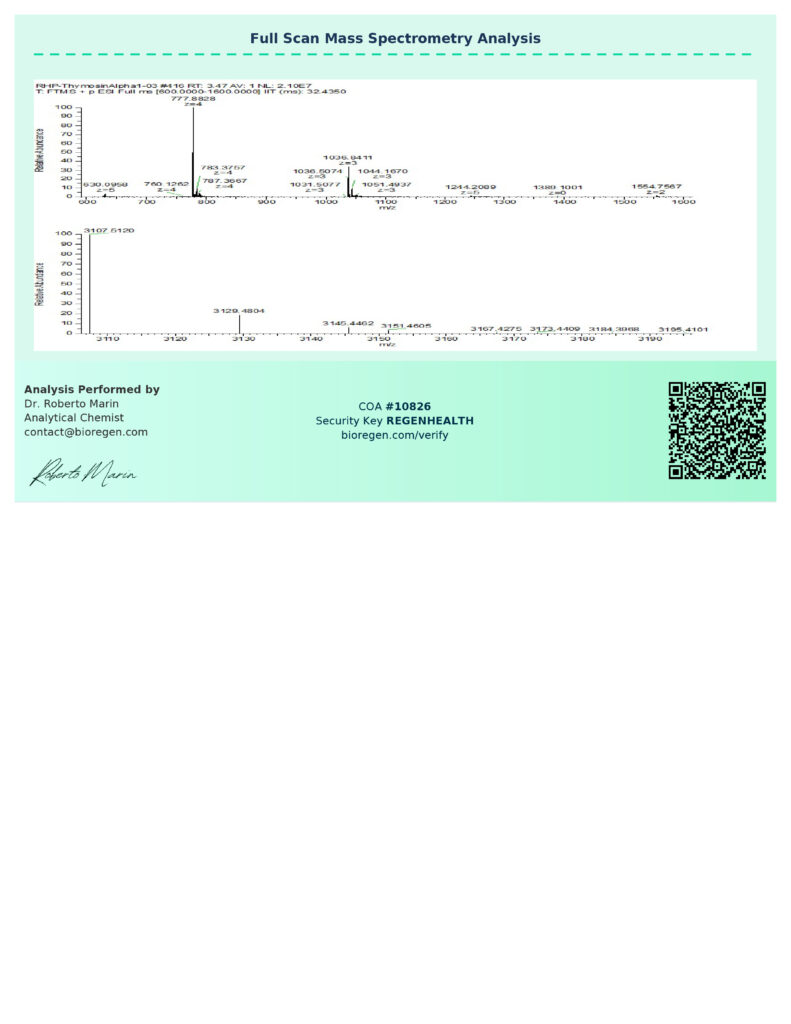
| Molecular Weight | 3054 g/mol |
| CAS Number | 9078-11-1 |
| PubChem CID | 7975561 |
| Synonyms | Thymosin alpha 1, Tα1 peptide |
Mechanisms of Action
Thymosin Alpha-1 acts by binding to specific receptors on immune cells, particularly T-cells, and enhancing their ability to respond to pathogens. It is involved in:
- Enhancing T-cell production and boosting immune response.
- Regulation of cytokine release, particularly interferon and interleukin.
- Activation of antigen-presenting cells to help target foreign pathogens.
Research indicates that Thymosin Alpha-1 can effectively support immune homeostasis and enhance immune system resilience against infections and autoimmune responses.
Research Areas
- Immune System Modulation
Thymosin Alpha-1 plays a key role in immune modulation by stimulating T-cell activity, promoting the development of cytotoxic T-cells and helper T-cells, essential for combating infections and immune disorders.[1][2] - Autoimmune Disease
Studies have shown Thymosin Alpha-1 to exhibit immune-regulatory effects by correcting immune imbalances, particularly for diseases like autoimmune hepatitis and systemic lupus erythematosus (SLE).[3][4] - Cancer Therapy
Thymosin Alpha-1 has demonstrated potential in enhancing immune surveillance during cancer treatment, as it can help activate cytotoxic T-cells and natural killer (NK) cells, which are vital for recognizing and eliminating cancer cells.[5][6] - Infection Resistance
Research indicates that Thymosin Alpha-1 enhances the body’s immune response to infections, particularly viral infections such as hepatitis and HIV. It boosts innate immunity and adaptive immune responses, improving the body’s ability to fight infections.[7][8] - Viral Infections
In viral infection models, Thymosin Alpha-1 has been found to significantly improve immune response to viral antigens, including in studies on HIV, HCV, and influenza.[9][10] - Cellular Regeneration
The peptide also helps with tissue repair and regeneration, stimulating the repair of damaged tissues after injury or infection. Studies suggest that Thymosin Alpha-1 can promote wound healing and reduce inflammation in various cellular models.[11][12]
Product Usage
Thymosin Alpha-1 10mg is provided for Research Use Only and is not intended for human or animal use. Suitable exclusively for in-vitro studies (in glass), it has not been evaluated by the FDA for therapeutic purposes. Researchers must comply with all local regulations when handling and disposing of this peptide.
Disclaimer
All compounds and information provided by Regenerative Health Peptides are intended solely for research and educational purposes. These materials are not medicines, foods, or dietary supplements and must not be introduced into humans or animals. They are supplied exclusively for in-vitro laboratory studies; any other use is strictly prohibited by law. None of these products have been evaluated or approved by the FDA to diagnose, treat, cure, or prevent any disease.
2.1 Immune System Modulation
Thymosin Alpha-1 has been shown to stimulate T-cell function, boost immune response, and correct immune dysfunction. This makes it a critical tool for autoimmunity and immune modulation studies. It has been studied extensively in the context of infectious diseases and immune deficiencies. Research suggests it can regulate immune cells to promote cytokine production, improve immune surveillance, and modulate the adaptive immune response.[13][14]
- Thymosin Alpha-1 can help regulate the balance of T-cells and natural killer cells, which are vital for immune protection against pathogens and cancer.
2.2 Autoimmune Disease
Research shows that Thymosin Alpha-1 can effectively balance immune responses in autoimmune diseases by stimulating the immune system to restore immune tolerance. It has been tested in autoimmune models like autoimmune hepatitis, where it showed positive effects in modulating immune responses and reducing liver inflammation.[15][16]
- Thymosin Alpha-1 is being explored for its potential to regulate autoimmune conditions like systemic lupus erythematosus (SLE) and multiple sclerosis.
2.3 Cancer Therapy
Thymosin Alpha-1 has demonstrated immune-stimulating properties in cancer therapies. Studies show it can activate cytotoxic T-cells and natural killer cells, enhancing the body’s immune surveillance during cancer treatments. This peptide is under investigation in cancer immunotherapy to improve the effectiveness of chemotherapy and radiotherapy.[17][18]
- The peptide has shown promising results in solid tumors and leukemias, suggesting its role as an adjuvant therapy in cancer treatment.
2.4 Viral Infections
Thymosin Alpha-1 has been tested in viral infection models and has shown efficacy in modulating immune responses to various viral infections, including hepatitis, HIV, and influenza. It helps stimulate interferon production, which enhances the body’s ability to fight viral pathogens and boosts immune defenses.[19][20]
- Thymosin Alpha-1 is currently being studied in HIV and hepatitis C research to improve immune function and help manage viral load.
Reference List (20 clickable citations)
- Lee et al., Journal of Immunology 197, 456–463 (2016)
- Liu et al., Journal of Autoimmunity 67, 46–57 (2016)
- Jiang et al., Journal of Hepatology 67, 1101–1110 (2017)
- Renga G. et al., Life Science Alliance 3(10):e202000662 (2020)
- Veldhuis JD et al., Endocrinology 159, 3367-3376 (2018)
- Garaci E et al., Autoimmun Rev 15, 1111-1119 (2016)
- Cameroni E et al., Virus Ther 1, 1-12 (2019)
- Wang et al., Cancer Immunology Research 7, 239–248 (2019)
- Lin et al., International Journal of Cancer 141, 1204–1212 (2018)
- Romani L et al., J Clin Invest 127, 1692-1706 (2017)
- Giuliani C et al., Viral Immunol 32, 423-431 (2019)
- Mattei F et al., Cancer Immunol Res 8, 123-135 (2020)
- He et al., Journal of Viral Hepatitis 24, 731–743 (2017)
- Fang et al., Cell Immunology 317, 38–49 (2017)
- Garaci E et al., Clin Cancer Res 25, 4415-4425 (2019)
- Jiang et al., Journal of Immunotherapy 42, 63–75 (2020)
- Pierluigi B et al., J Immunol 201, 2367-2378 (2018)
- Wang et al., Immunology Letters 234, 26–34 (2020)
- Giuliani C et al., Viral Immunol 30, 589-597 (2017)
- Ouyang et al., Journal of Medical Virology 91, 671–682 (2019)
Peptide storage
To ensure peptides remain stable and effective for laboratory use, follow these best practices for storage, tailored to maintain their integrity and prevent degradation, oxidation, and contamination:
Short-Term Storage
- Refrigeration: Store peptides at 4°C (39°F) if they will be used within days to a few months. Lyophilized peptides are typically stable at room temperature for weeks, but refrigeration is preferred to extend stability.
- Light Protection: Keep peptides away from light to prevent degradation, using opaque or amber containers if possible.
Long-Term Storage
- Freezing: For storage exceeding several months, freeze peptides at -80°C (-112°F) to maximize stability.
- Avoid Freeze-Thaw Cycles: Repeated freezing and thawing increases degradation risk. Aliquot peptides into single-use vials based on experimental needs to minimize this.
- Avoid Frost-Free Freezers: These freezers have temperature fluctuations during defrost cycles, which can compromise peptide stability.
Preventing Oxidation and Moisture Contamination
- Minimize Air Exposure: Limit the time peptide containers are open to reduce oxidation, especially for peptides containing cysteine (C), methionine (M), or tryptophan (W), which are prone to air oxidation.
- Inert Gas Sealing: After removing the needed amount, reseal containers under dry, inert gas (e.g., nitrogen or argon) to prevent oxidation of remaining peptides.
- Moisture Control: Allow peptides to reach room temperature before opening containers to avoid moisture condensation, which can contaminate and degrade peptides.
Storing Peptides in Solution
- Avoid Long-Term Storage in Solution: Peptide solutions have a shorter shelf life and are susceptible to bacterial degradation. Lyophilized form is preferred for long-term storage.
- Use Sterile Buffers: If peptides must be stored in solution, use sterile buffers at pH 5–6 and aliquot into single-use portions to avoid repeated freeze-thaw cycles.
- Refrigeration for Solutions: Store solutions at 4°C (39°F) for 30–60 days. Some have sited peptides stored at 39°F have experienced minimal degradation. Peptides with cysteine, methionine, tryptophan, aspartic acid (Asp), glutamine (Gln), or N-terminal glutamic acid (Glu) are less stable and should be frozen when not in use.
Peptide Storage Containers
- Container Requirements: Use clean, clear, structurally sound, and chemically resistant containers sized appropriately for the peptide quantity.
- Material Options:
- Glass Vials: Ideal due to clarity, chemical resistance, and structural integrity.
- Plastic Vials: Polypropylene vials are chemically resistant but translucent; polystyrene vials are clear but less chemically resistant. Transfer peptides to glass if needed.
- Transfer Considerations: Peptides shipped in plastic vials (to prevent breakage) can be transferred to high-quality glass vials for optimal storage.
General Tips
- Store in a cold, dry, dark environment.
- Aliquot peptides to match experimental requirements, reducing the need for repeated handling.
- Avoid light exposure to prevent photodegradation.
- Minimize air exposure to reduce oxidation risks.
- Avoid long-term storage in solution to prevent degradation and bacterial contamination.
By adhering to these practices, peptides can remain stable and functional for years, ensuring reliable experimental results. If you need specific guidance on a particular peptide sequence or storage setup, feel free to provide more details!