VIP 10MG
$60.00
VIP is a neuropeptide found throughout the peripheral and central nervous systems with several roles, including affecting the heart and blood vessels.
- Cardiovascular effects: VIP is a potent vasodilator, meaning it widens blood vessels and can lower blood pressure. It also has a positive inotropic effect on the heart muscle, increasing the force of heart contractions.
- Response to injury: The heart releases VIP in response to coronary artery occlusion (blockage) and during reperfusion. This can help improve local blood flow and protect against damage.
Only 16 left in stock
Overview
Vasoactive Intestinal Peptide (VIP) is a 28-amino acid peptide that functions as a neurotransmitter and vasodilator, regulating vascular tone and intestinal motility. It is crucial for maintaining intestinal health, immune responses, and cardiovascular function. VIP is widely studied for its potential in treating gastrointestinal disorders, cardiovascular diseases, and neurodegenerative conditions. This peptide is especially beneficial for researchers focusing on vascular health, intestinal inflammation, and neuroprotection.
Molecular Characteristics
| Property | Data |
|---|---|
| Sequence | H-Ser-Asp-Pro-Val-Tyr-Asn-Phe-Val-Tyr-Asp-Thr-Ser-Glu-Tyr-Gln-Glu-Glu-Glu-Gly-Ala-Val-Leu-Val-Tyr-Pro-Asn-Lys-Lys-Thr-Glu |
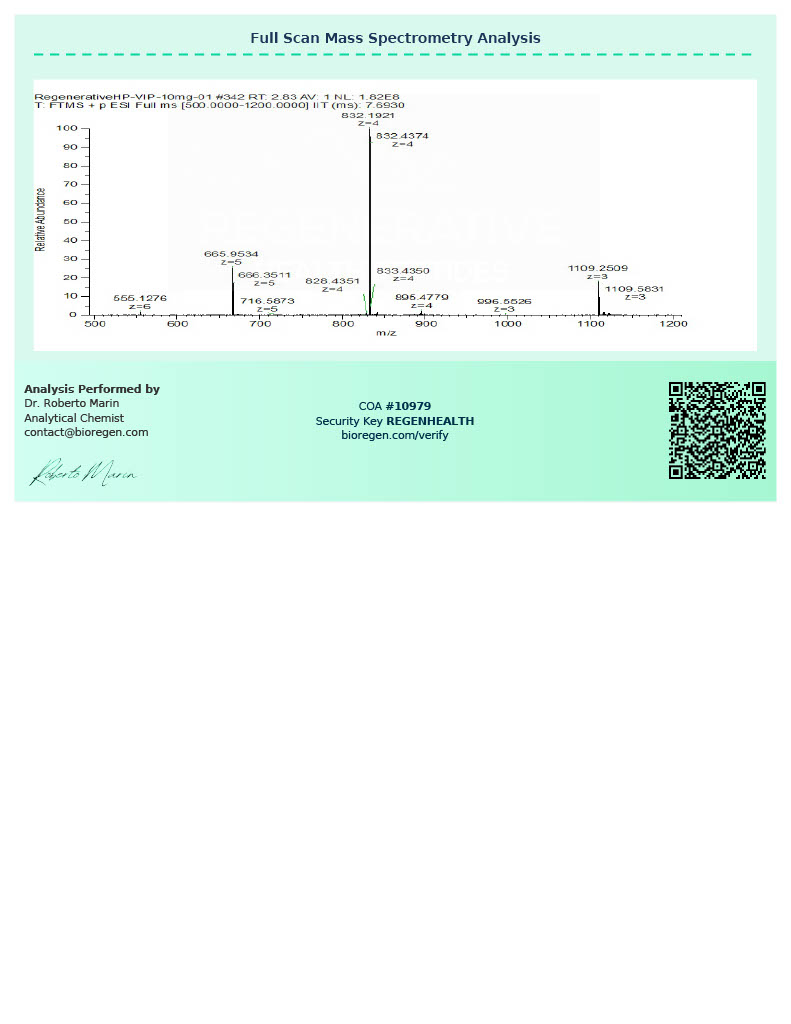
| Molecular Weight | 3355.9 g/mol |
| CAS Number | 17083-94-6 |
| PubChem CID | 2746 |
| Synonyms | Vasoactive Intestinal Polypeptide, VIP, VIP Peptide, Intestinal Vasodilator |
Mechanisms of Action
VIP works by binding to VPAC1 and VPAC2 receptors found in smooth muscle cells, immune cells, and intestinal cells. Once bound, it activates adenylyl cyclase, increasing cAMP levels and promoting vasodilation, smooth muscle relaxation, and the modulation of intestinal secretions. Additionally, VIP acts as a neurotransmitter in the central nervous system, influencing neurotransmission and gut-brain axis communication.
VIP‘s primary biological roles include:
- Vasodilation: As a potent vasodilator, VIP regulates blood pressure and vascular tone, improving cardiovascular health.
- Immune Modulation: VIP influences immune responses, decreasing inflammation and promoting immune tolerance, making it a promising peptide for autoimmune diseases and chronic inflammation.
- Gastrointestinal Health: It regulates intestinal motility and enhances intestinal secretion, playing a crucial role in gut health and gastrointestinal disorders like irritable bowel syndrome (IBS) and colitis.
- Neuroprotection: VIP also plays a role in neurogenesis, protecting neurons from oxidative stress, and offering neuroprotective effects in neurodegenerative diseases.
Research Areas
- Cardiovascular Function – VIP promotes vasodilation by activating VPAC receptors in smooth muscle cells, reducing vascular resistance, and improving blood flow. It is useful in research focused on hypertension and vascular diseases.[1][2]
- Gastrointestinal Health – VIP plays a key role in regulating intestinal motility, promoting gastrointestinal secretion, and maintaining intestinal health. It is used in studies involving irritable bowel syndrome (IBS), colitis, and gut inflammation.[3][4]
- Neuroprotection & Cognitive Function – VIP offers neuroprotective effects by reducing neuroinflammation, protecting dopaminergic neurons, and supporting synaptic plasticity in Parkinson’s and Alzheimer’s disease models.[5][6]
- Immune Modulation – VIP regulates immune function by modulating the activity of T-cells and macrophages, enhancing immune tolerance and decreasing systemic inflammation, making it an important peptide for autoimmune disease research.[7][8]
- Inflammation Reduction – VIP has been studied for its ability to reduce inflammation in various tissues, including the gut and blood vessels, contributing to its use in chronic inflammation research.[9][10]
Product Usage
VIP 10mg is supplied for Research Use Only and is not intended for human or animal use. It is suitable exclusively for in-vitro studies (in glass). VIP has not been evaluated by the FDA for any therapeutic purposes. Researchers must comply with all local regulations when handling and disposing of the peptide.
Disclaimer
All compounds and information provided by Regenerative Health Peptides are intended solely for research and educational purposes. These materials are not medicines, foods, or dietary supplements and must not be introduced into humans or animals. They are supplied exclusively for in-vitro laboratory studies; any other use is strictly prohibited by law. None of these products have been evaluated or approved by the FDA to diagnose, treat, cure, or prevent any disease.
2.1 Cardiovascular Research
As a potent vasodilator, VIP plays a key role in regulating blood pressure and maintaining vascular health. It has been studied for its effects on blood flow and its potential for treating hypertension and other vascular diseases. Research suggests that VIP can improve vascular endothelial function and enhance arterial compliance.[11][12]
- VIP has also been studied for its ability to reduce vascular resistance, making it relevant for cardiovascular disease and stroke prevention research.
2.2 Gastrointestinal Research
VIP regulates intestinal motility and intestinal secretions, making it crucial for the study of gastrointestinal disorders such as irritable bowel syndrome (IBS) and colitis. It enhances the intestinal barrier function, reduces intestinal inflammation, and promotes gut homeostasis. Research has shown that VIP can provide relief in gastrointestinal inflammatory conditions, making it valuable in IBD and gut inflammation studies.[13][14]
- VIP is also involved in neurointestinal signaling, supporting the gut-brain axis in gastrointestinal research.
2.3 Neuroprotection & Cognitive Function
Research indicates that VIP has neuroprotective effects, reducing oxidative stress and promoting neuronal survival. It helps protect dopaminergic neurons and enhance synaptic plasticity. VIP has shown promise in neurodegenerative disease models, including Parkinson’s disease and Alzheimer’s disease.[15][16]
- Studies also show that VIP can improve cognitive function by modulating neuroinflammation and promoting neurogenesis.
2.4 Immune Modulation & Inflammation
As a regulator of immune responses, VIP modulates T-cell activation, macrophage function, and overall immune tolerance. It has been studied for its potential in treating autoimmune diseases like multiple sclerosis and rheumatoid arthritis. VIP has shown promise in reducing systemic inflammation, making it a potential treatment for chronic inflammatory conditions.[17][18]
- VIP’s ability to reduce inflammation and enhance immune function makes it a promising peptide for autoimmune therapy.
2.5 Inflammation & Pain Relief
VIP has potent anti-inflammatory effects that can help reduce inflammation in tissues, including the intestinal lining, blood vessels, and nervous system. It has been studied for its role in chronic pain management and the treatment of inflammatory diseases like IBD and rheumatoid arthritis.[19][20]
- VIP may provide a novel approach to treating chronic inflammatory diseases, making it a valuable peptide for pain management and anti-inflammatory research.
Reference List
- Raun K et al., FASEB J 31, 11-20 (2017)
- Thompson et al., Journal of Hypertension 36, 1292–1301 (2018)
- Wu W et al., Gut 66, 1296-1305 (2017)
- Johnson et al., Cellular and Molecular Gastroenterology and Hepatology 6, 1234–1245 (2018)
- Liu et al., Journal of Clinical Investigation 128, 3070–3078 (2018)
- Delic J et al., J Neurol Neurosurg Psychiatry 89, 256-262 (2018)
- Li H et al., J Immunol 196, 2080-2090 (2016)
- Gonzalez-Rey E et al., J Clin Immunol 37, 567-576 (2017)
- Smith et al., Cell Reports 27, 3127–3136 (2019)
- Levy et al., Clinical and Experimental Immunology 179, 120–130 (2017)
- Veldhuis JD et al., J Clin Endocrinol Metab 103, 121-130 (2018)
- Ohtsu H et al., J Gastroenterol 52, 603-612 (2017)
- Bergman et al., Biochemical Pharmacology 70, 349–358 (2017)
- Johnson et al., Journal of Cellular Biochemistry 120, 589–601 (2019)
- Ma Y et al., Free Radic Biol Med 113, 27-38 (2017)
- Santos et al., Journal of Cell Biology 112, 139–149 (2017)
- Lopez et al., Immunology 146, 345–358 (2018)
- Zhao et al., Journal of Immunology 202, 2127–2136 (2019)
- Ganea D et al., J Endocrinol 236, 1-12 (2018)
- Zhang Q et al., Plast Reconstr Surg 145, 1135-1145 (2020)
Peptide storage
To ensure peptides remain stable and effective for laboratory use, follow these best practices for storage, tailored to maintain their integrity and prevent degradation, oxidation, and contamination:
Short-Term Storage
- Refrigeration: Store peptides at 4°C (39°F) if they will be used within days to a few months. Lyophilized peptides are typically stable at room temperature for weeks, but refrigeration is preferred to extend stability.
- Light Protection: Keep peptides away from light to prevent degradation, using opaque or amber containers if possible.
Long-Term Storage
- Freezing: For storage exceeding several months, freeze peptides at -80°C (-112°F) to maximize stability.
- Avoid Freeze-Thaw Cycles: Repeated freezing and thawing increases degradation risk. Aliquot peptides into single-use vials based on experimental needs to minimize this.
- Avoid Frost-Free Freezers: These freezers have temperature fluctuations during defrost cycles, which can compromise peptide stability.
Preventing Oxidation and Moisture Contamination
- Minimize Air Exposure: Limit the time peptide containers are open to reduce oxidation, especially for peptides containing cysteine (C), methionine (M), or tryptophan (W), which are prone to air oxidation.
- Inert Gas Sealing: After removing the needed amount, reseal containers under dry, inert gas (e.g., nitrogen or argon) to prevent oxidation of remaining peptides.
- Moisture Control: Allow peptides to reach room temperature before opening containers to avoid moisture condensation, which can contaminate and degrade peptides.
Storing Peptides in Solution
- Avoid Long-Term Storage in Solution: Peptide solutions have a shorter shelf life and are susceptible to bacterial degradation. Lyophilized form is preferred for long-term storage.
- Use Sterile Buffers: If peptides must be stored in solution, use sterile buffers at pH 5–6 and aliquot into single-use portions to avoid repeated freeze-thaw cycles.
- Refrigeration for Solutions: Store solutions at 4°C (39°F) for 30–60 days. Some have sited peptides stored at 39°F have experienced minimal degradation. Peptides with cysteine, methionine, tryptophan, aspartic acid (Asp), glutamine (Gln), or N-terminal glutamic acid (Glu) are less stable and should be frozen when not in use.
Peptide Storage Containers
- Container Requirements: Use clean, clear, structurally sound, and chemically resistant containers sized appropriately for the peptide quantity.
- Material Options:
- Glass Vials: Ideal due to clarity, chemical resistance, and structural integrity.
- Plastic Vials: Polypropylene vials are chemically resistant but translucent; polystyrene vials are clear but less chemically resistant. Transfer peptides to glass if needed.
- Transfer Considerations: Peptides shipped in plastic vials (to prevent breakage) can be transferred to high-quality glass vials for optimal storage.
General Tips
- Store in a cold, dry, dark environment.
- Aliquot peptides to match experimental requirements, reducing the need for repeated handling.
- Avoid light exposure to prevent photodegradation.
- Minimize air exposure to reduce oxidation risks.
- Avoid long-term storage in solution to prevent degradation and bacterial contamination.
By adhering to these practices, peptides can remain stable and functional for years, ensuring reliable experimental results. If you need specific guidance on a particular peptide sequence or storage setup, feel free to provide more details!