Terms of Service Agreement
1. Agreement to Terms
By accessing the website of Regenerative Health Peptides or purchasing any products offered, you agree to be bound by these Terms of Service. If you do not agree to these terms, you are not authorized to access this site or purchase any products or services.
2. Intended Use and Product Restrictions
All products listed and sold by Regenerative Health Peptides are strictly for laboratory research use only. They are not intended for human or animal consumption, diagnostic procedures, therapeutic applications, or any form of bodily administration.
By proceeding, you acknowledge and agree to these terms and our full Terms and Conditions.
- No Regulatory Approval: Products have not been evaluated by the U.S. Food and Drug Administration (FDA). They are not intended to diagnose, treat, cure, or prevent any disease.
- Compliance: You agree to handle all materials in accordance with all applicable local, state, and federal laws and regulations.
- Handling: Products are supplied in lyophilized (powder) form. Research supplies such as diluents, sterile equipment, or reconstitution materials are not included.
3. Eligibility and Account Termination
Services are available only to qualified individuals, laboratories, institutions, and organizations capable of safely handling research compounds. Regenerative Health Peptides reserves the right to refuse service, cancel orders, or terminate accounts at its sole discretion, including but not limited to suspected misuse or violation of these terms.
4. Policy on Human Consumption
We maintain a strict zero-tolerance policy regarding the introduction of our products into humans or animals.
- Communication Ban: Any communication—email, chat, or otherwise—that implies, requests, or discusses bodily administration, dosing, reconstitution, or consumption will result in immediate account termination and order cancellation. We do not provide instructions for reconstitution or dosing.
5. Disclaimer of Warranties
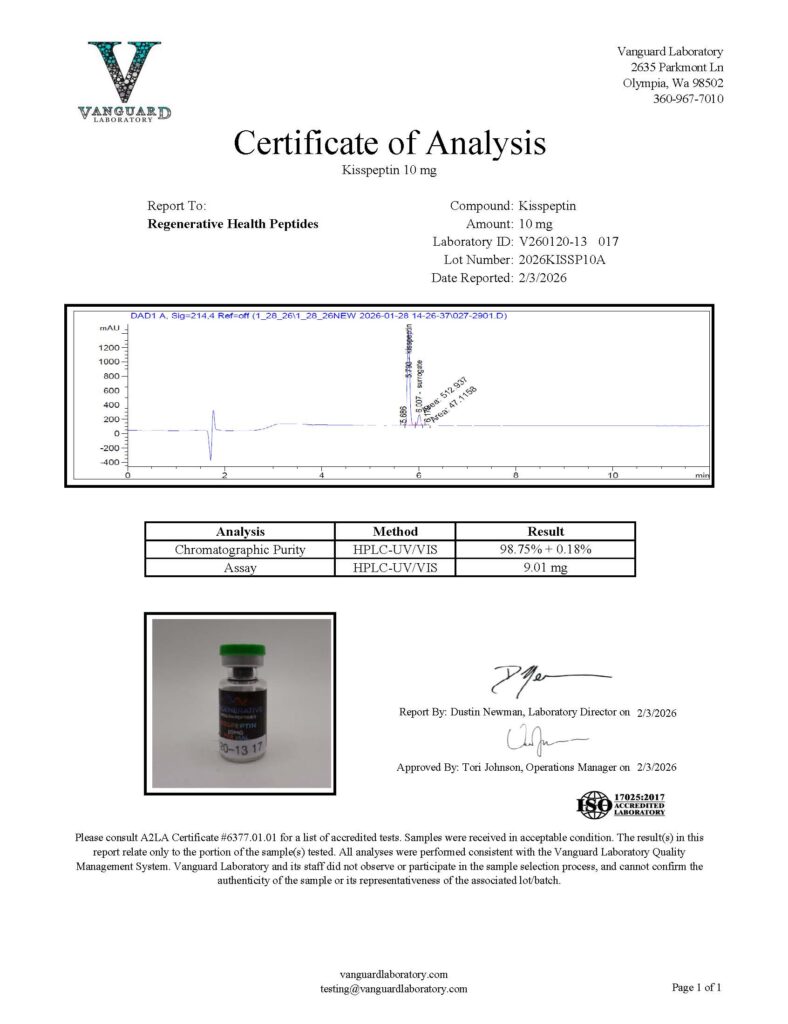
Regenerative Health Peptides may provide third-party analytical data where available for informational purposes only. All materials are provided “as is” without any warranty, express or implied. The company makes no representation regarding accuracy, merchantability, or fitness for a particular research purpose.
6. Limitation of Liability
In no event shall Regenerative Health Peptides, its owners, officers, employees, or affiliates be liable for any direct, indirect, incidental, or consequential damages arising from the use, misuse, or inability to use our products or website. The purchaser assumes full responsibility for all risks associated with handling and experimentation.
7. Indemnification
You agree to indemnify, defend, and hold harmless Regenerative Health Peptides from any claims, liabilities, damages, losses, or costs (including legal fees) arising from your misuse of products, negligence, violation of these terms, or failure to comply with applicable laws.
8. Privacy and Data
Your use of this site is also governed by our Privacy Policy, which outlines how personal information is collected, stored, and protected.
9. Marketing Consent
By creating an account or placing an order, you consent to receive communications regarding order updates, product releases, and promotional information. You may opt out of marketing communications at any time using the “unsubscribe” link in our emails.
10. Governing Law
These Terms of Service are governed by and construed in accordance with the laws of the State of Washington, without regard to conflict-of-law principles. Any legal action or proceeding related to your access to or use of the site or products shall be brought exclusively in state or federal courts located within Washington State.
11. Modifications
Regenerative Health Peptides reserves the right to update or modify these terms at any time without prior notice. Continued use of the website following any changes constitutes acceptance of the revised terms.
12. Contact
For inquiries related to these Terms of Service or the status of an order, please contact us through our official support channels at support@rhpeptides.com.
Your personal data will be used to support your experience throughout this website, to manage access to your account, and as described in our privacy policy.