GLOW (10MG / 10MG / 50MG) Analytical Reference Material (In Vitro Research Only)
GLOW is a three-peptide research blend of BPC-157 (10 mg), TB-500 (10 mg) and GHK-Cu (50 mg), 70 mg in total. Published research has studied these compounds individually in fibroblast and tissue-repair models, looking at nitric-oxide signaling, the cell's actin skeleton, and collagen gene expression. Each component is listed separately below.
2:00 PM PST Same-Day Laboratory Dispatch · Free Shipping Over $300
1:1 Analytical & Chemical Specifications
| Analytical Parameter | Verified Specification |
|---|---|
| CAS Number | BPC-157: 137525-51-0 | TB-500 (Thymosin Beta-4): 77591-33-4 | GHK-Cu: 49557-75-7 |
| Molecular Formula | BPC-157: C62H98N16O22 | TB-500 (Thymosin Beta-4): C212H350N56O78S | GHK-Cu: C14H22CuN6O4 |
| Molecular Weight | BPC-157: 1419.53 g/mol | TB-500 (Thymosin Beta-4): 4963.50 g/mol | GHK-Cu: 401.91 g/mol |
| Amino Acid Sequence | BPC-157 (10mg): Gly-Glu-Pro-Pro-Pro-Gly-Lys-Pro-Ala-Asp-Asp-Ala-Gly-Leu-Val | TB-500 (Thymosin Beta-4) (10mg): Ac-Ser-Asp-Lys-Pro-Asp-Met-Ala-Glu-Ile-Glu-Lys-Phe-Asp-Lys-Ser-Lys-Leu-Lys-Lys-Thr-Glu-Thr-Gln-Glu-Lys-Asn-Pro-Leu-Pro-Ser-Lys-Glu-Thr-Ile-Glu-Gln-Glu-Lys-Gln-Ala-Gly-Glu-Ser | GHK-Cu (50mg): Gly-His-Lys·Cu(II) |
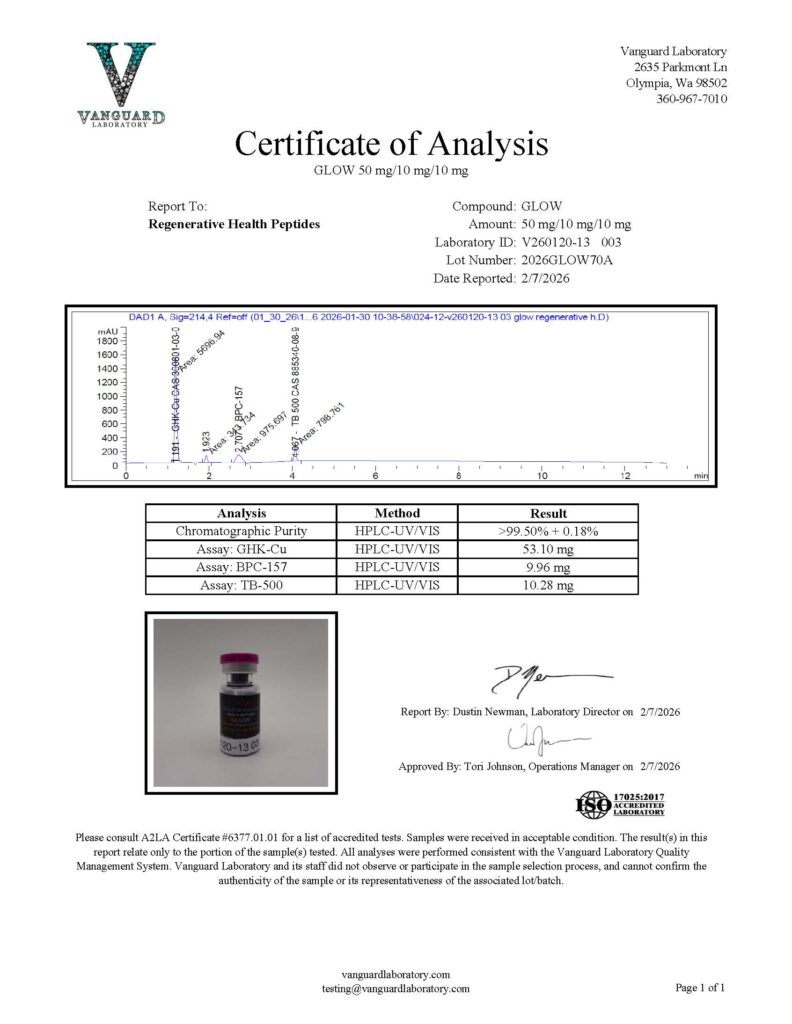
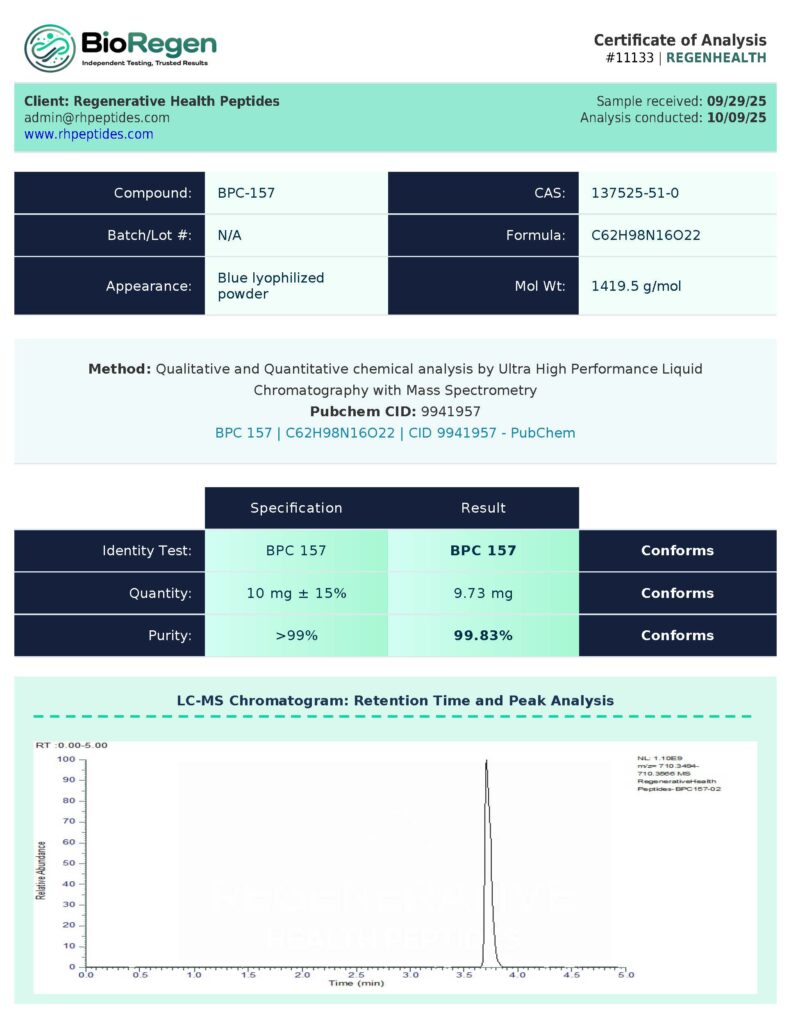
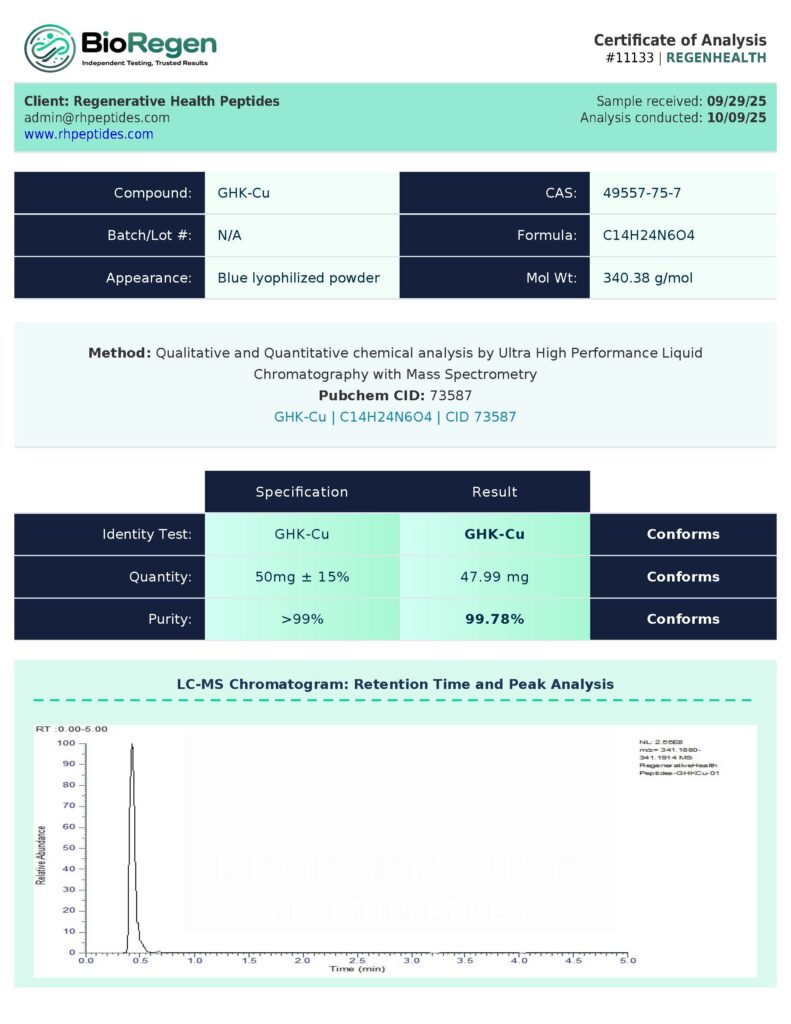
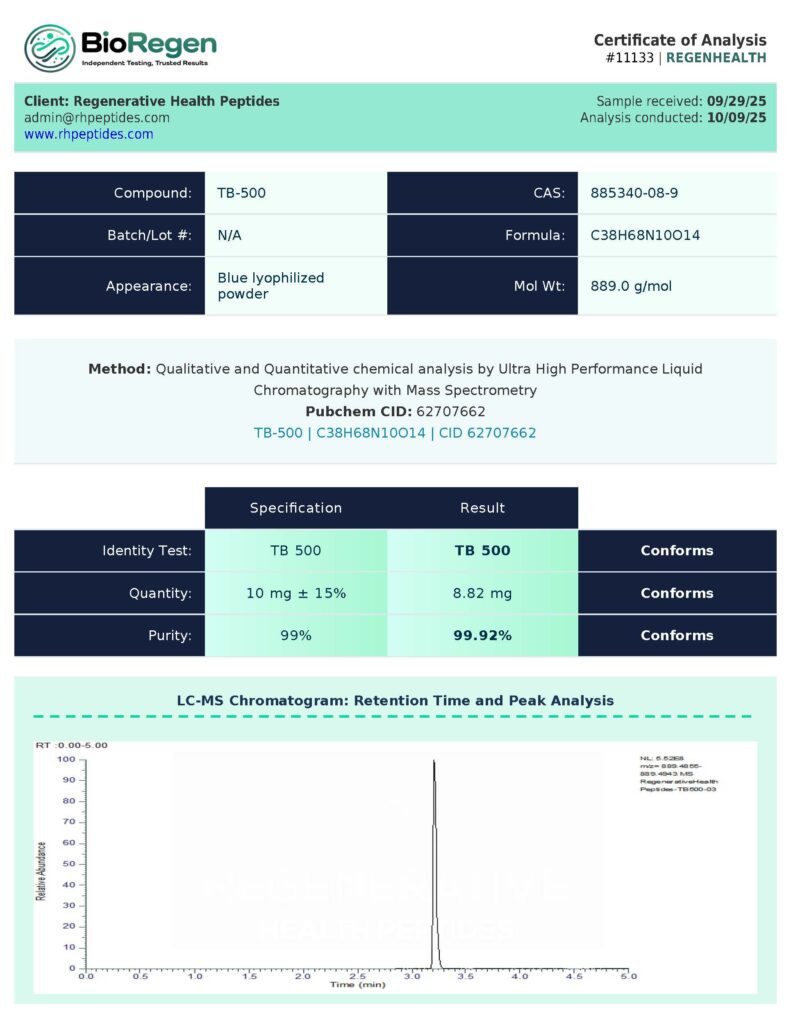
| Chromatographic Purity (RP-HPLC) | >=99.0% Peak Area (Observed Lot 2026GLOW70A: 99.5%) |
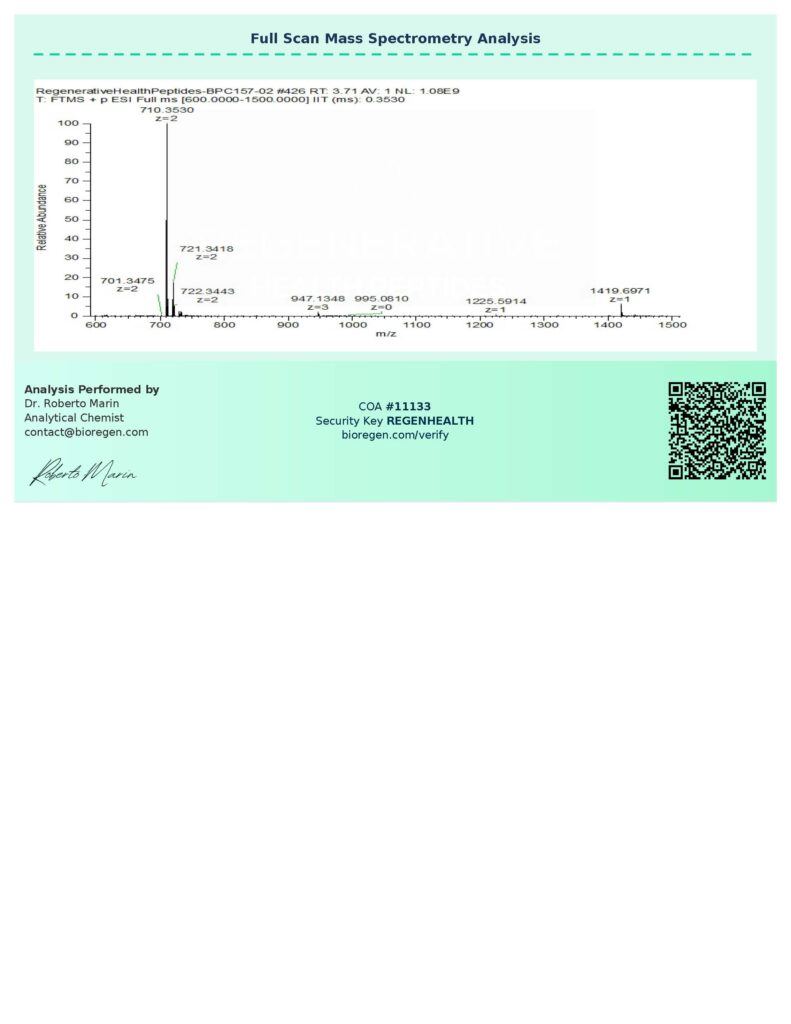
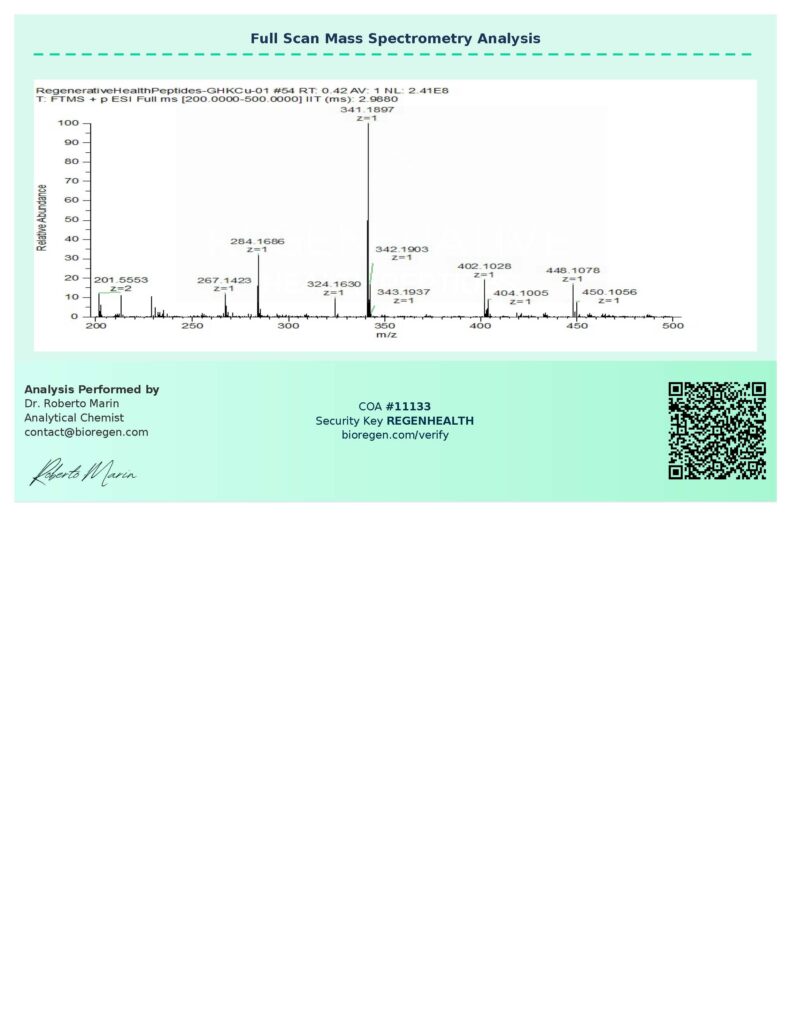
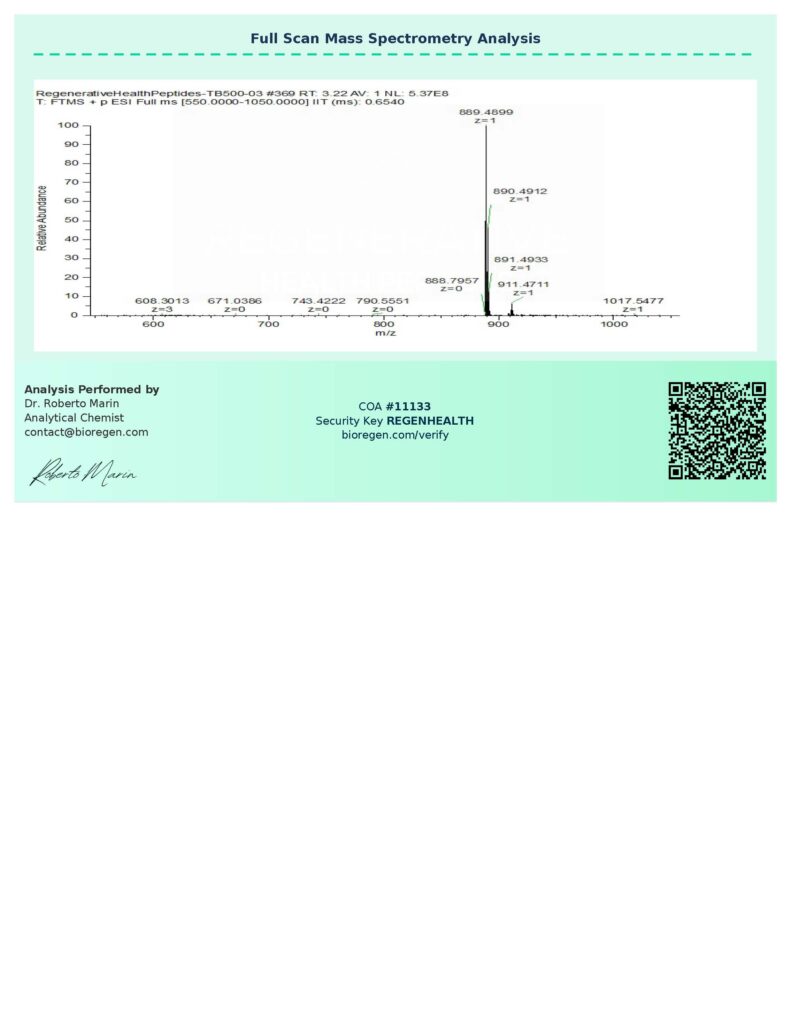
| Identity Verification | Electrospray Ionization Mass Spectrometry (ESI-MS) |
| Physical Form | Lyophilized Powder in Sealed Desiccated Glass Vial |
| Recommended Storage | -20°C Desiccated & Protected from Light |
| Regulatory Classification | Research Use Only (RUO) — Not a 503A Compounding Pharmacy Product; Strictly Not for Human or Veterinary Use |
| Lot Traceability | Lot 2026GLOW70A (Tested 2026-03-18) — Verify Dataset in COA Library → |
| Blend Component Breakdown | |
| BPC-157 (10mg) |
MW: 1419.53 g/mol
CAS: 137525-51-0
Seq: Gly-Glu-Pro-Pro-Pro-Gly-Lys-Pro-Ala-Asp-Asp-Ala-Gly-Leu-Val
|
| TB-500 (Thymosin Beta-4) (10mg) |
MW: 4963.50 g/mol
CAS: 77591-33-4
Seq: Ac-Ser-Asp-Lys-Pro-Asp-Met-Ala-Glu-Ile-Glu-Lys-Phe-Asp-Lys-Ser-Lys-Leu-Lys-Lys-Thr-Glu-Thr-Gln-Glu-Lys-Asn-Pro-Leu-Pro-Ser-Lys-Glu-Thr-Ile-Glu-Gln-Glu-Lys-Gln-Ala-Gly-Glu-Ser
|
| GHK-Cu (50mg) |
MW: 401.91 g/mol
CAS: 49557-75-7
Seq: Gly-His-Lys·Cu(II)
|
Lot-Specific Certificate of Analysis (COA)
In Vitro Laboratory Research Scope
Typical laboratory uses: side-by-side study of cell migration, new-vessel (angiogenic) signaling, and collagen and extracellular-matrix gene expression in fibroblast cultures. For in-vitro laboratory research only. Not for human or animal use.
Analytical Verification & Storage Parameters for GLOW
How is the chromatographic purity of GLOW (10MG / 10MG / 50MG) verified?
Every production batch of GLOW (10MG / 10MG / 50MG), including active Lot 2026GLOW70A, undergoes independent Reverse-Phase High-Performance Liquid Chromatography (RP-HPLC) with UV/Vis detection at 214 nm and Electrospray Ionization Mass Spectrometry (ESI-MS), confirming 99.5% peak area purity (retention time 10.41 min) and exact molecular mass concordance prior to catalog release.
What are the laboratory storage and stability parameters for lyophilized GLOW?
Lyophilized GLOW reference material is supplied in a sealed, desiccated borosilicate glass vial under inert atmosphere and must be stored at -20°C protected from light to prevent hydrolytic or oxidative cleavage. Once solubilized in sterile aqueous buffer for in vitro assays, maintain aliquots at 2°C to 8°C and avoid repeated freeze-thaw cycles.
What are the chemical identifiers and regulatory classification of GLOW?
GLOW is characterized by CAS Registry identifier BPC-157: 137525-51-0 | TB-500 (Thymosin Beta-4): 77591-33-4 | GHK-Cu: 49557-75-7, molecular formula BPC-157: C62H98N16O22 | TB-500 (Thymosin Beta-4): C212H350N56O78S | GHK-Cu: C14H22CuN6O4, and theoretical molecular weight BPC-157: 1419.53 g/mol | TB-500 (Thymosin Beta-4): 4963.50 g/mol | GHK-Cu: 401.91 g/mol. Regenerative Health Peptides supplies this reagent strictly as a Research Use Only (RUO) analytical reference material for qualified 21+ in vitro laboratory investigations, never for human or veterinary use.
Primary Scientific Literature & Preclinical Citations
Peer-ReviewedThe following peer-reviewed scientific publications report preclinical investigations into the biochemical mechanisms and receptor pharmacology of this compound. Regenerative Health Peptides supplies this material strictly for in-vitro laboratory research.
Laboratory Testing Guides & Documentation
View All Guides →Similar Research Peptides

GHK-Cu
GHK-Cu is a naturally occurring three-amino-acid peptide (glycyl-histidyl-lysine) bound to a copper ion, first identified…

Melanotan 1
Melanotan 1 (afamelanotide) is a synthetic 13-amino-acid analog of alpha-MSH, the natural hormone that signals…

KLOW
KLOW is a four-component research blend of BPC-157 (10 mg), TB-500 (10 mg), KPV (10…

BPC-157
BPC-157 is a synthetic 15-amino-acid peptide whose sequence comes from a protein found in human…